


Introduction
When it comes to understanding the inner workings of women’s health, the hysteroscope plays a pivotal role. This slender, light-transmitting tool offers a real-time glimpse into the womb, shedding light on various conditions from fibroids to potential causes of infertility. In gynecology, ensuring accessibility to straightforward information is key, especially for those seeking to foster a trusting and compassionate relationship with their healthcare provider.
Hysteroscopy is a technique that allows doctors to peer inside the uterus without making large incisions. It serves a dual purpose—diagnostic and therapeutic—making it a versatile tool in managing women’s health. This approach aligns well with the desires of many seeking minimal discomfort and rapid recovery in a medical care experience.
Whether it’s to address abnormal bleeding, remove polyps, locate an intrauterine device (IUD), or simply to assess the overall health of the uterus, hysteroscopy offers a less invasive alternative to traditional surgical methods. It’s a testament to the advances in medical technology aimed at improving the well-being and healthcare journey of women.
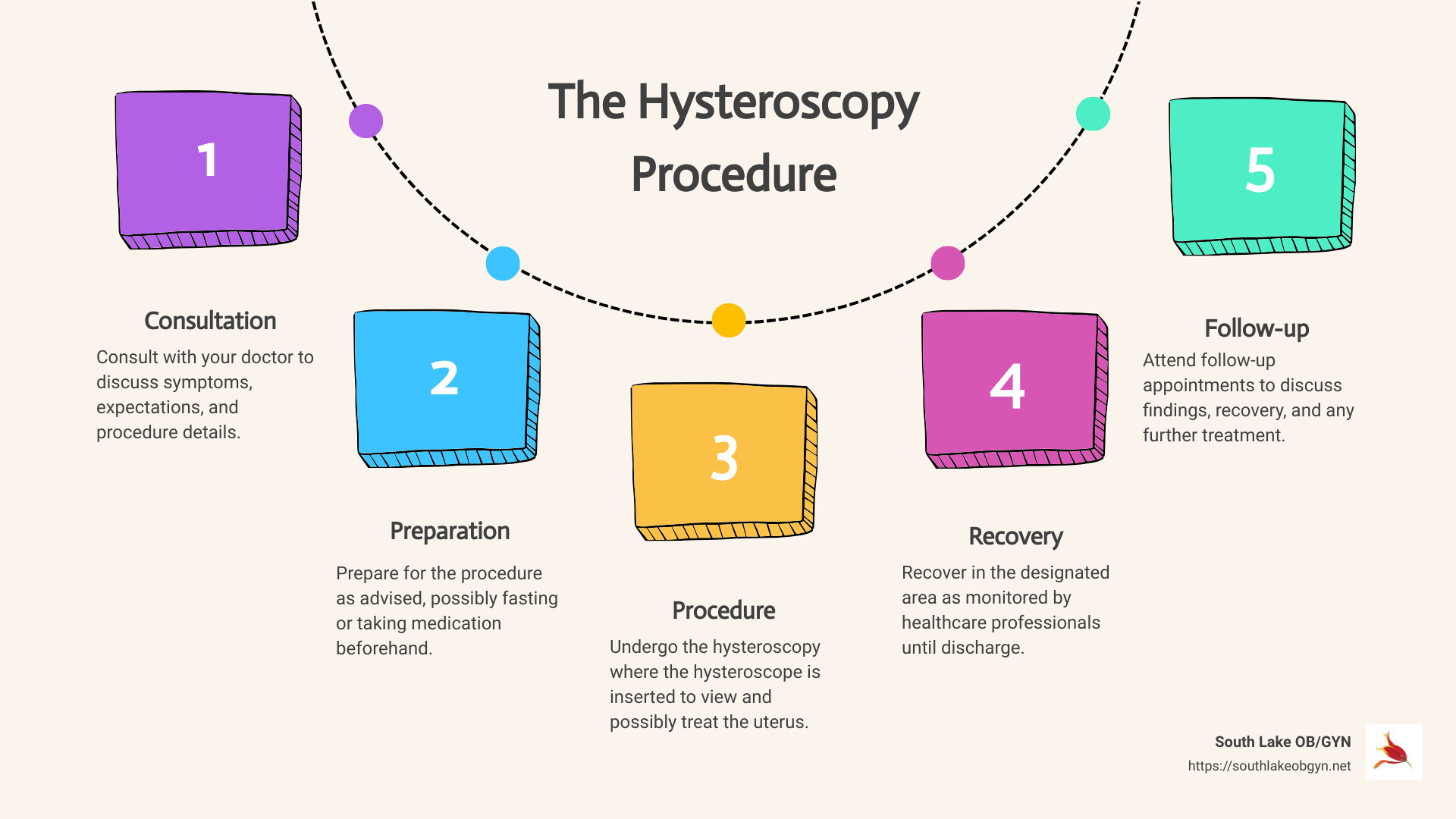
Understanding Hysteroscopy
Purpose
A hysteroscopy is a way for doctors to look inside your uterus. This procedure helps find the cause of problems like heavy bleeding or pain. It can also check for things like fibroids or polyps. Sometimes, it’s used to help with fertility issues or to make sure an IUD is in the right place.
Procedure
Here’s how it works:
1. Preparation: You’ll need to remove your clothing and wear a hospital gown. It’s important to empty your bladder before starting.
2. Anesthesia: Depending on your situation, you might get medicine to help you relax or sleep. Not everyone needs this, though.
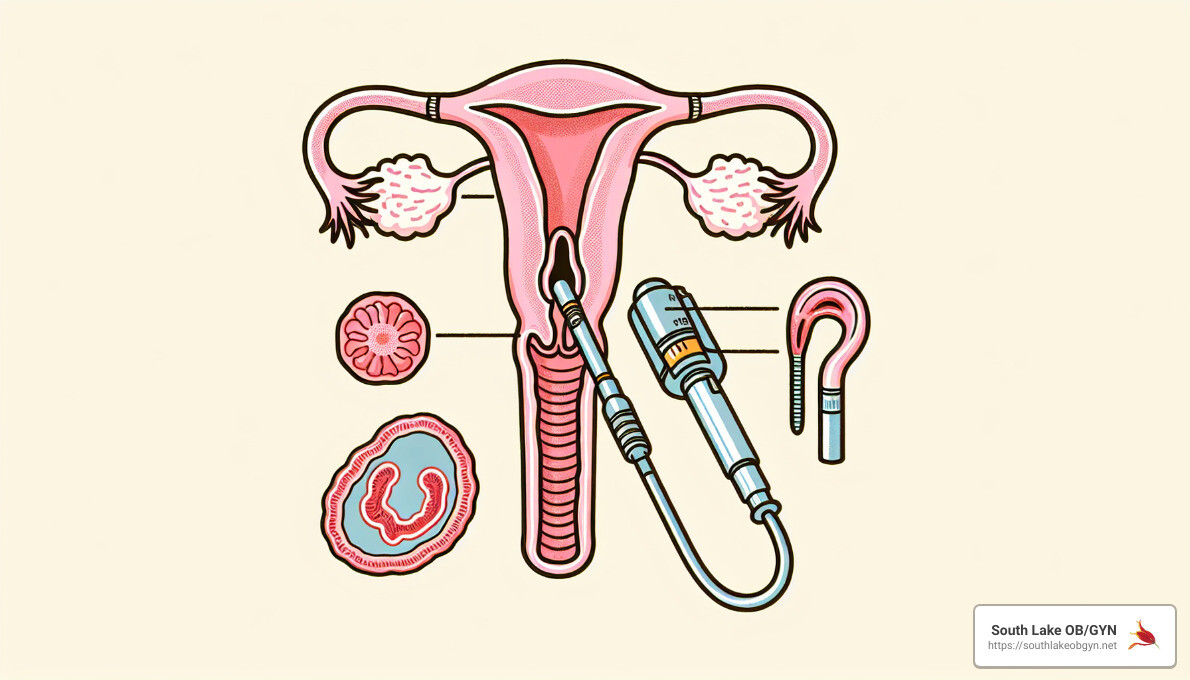
3. The Hysteroscope: Your doctor will gently insert a thin tool called a hysteroscope into your vagina. It goes through the cervix and into the uterus.
4. Viewing the Uterus: The hysteroscope has a light and a camera. It sends pictures to a screen so your doctor can see inside your uterus.
5. Expanding the Uterus: Your doctor might put in a liquid or gas to make the uterus bigger. This makes it easier to see everything.
6. Checking for Issues: The doctor looks for any problems. They might take small samples of tissue (biopsies) to test later.
Hysteroscope
A hysteroscope is a key player in this procedure. It’s a thin, lighted tube that allows doctors to see inside your uterus without making big cuts on your body. This tool can also carry tiny instruments for treatment. That means if your doctor finds something like a small fibroid or polyp, they might be able to remove it during the hysteroscopy.
Why It Matters
Hysteroscopy offers a clear view of your uterus, helping diagnose or treat issues with less pain and recovery time than open surgery. It’s a smart choice for many women because it’s less invasive but still very effective.
In Summary
A hysteroscopy is a safe, effective way to look inside the uterus. Using a hysteroscope, doctors can diagnose or treat problems without needing major surgery. This means you can get back to your life faster, with less discomfort.
Next, we’ll dive into the reasons why your doctor might recommend a hysteroscopy. Whether it’s unusual bleeding, fertility concerns, or something else, understanding the purpose can help you feel more prepared and at ease.
By breaking down the procedure into simple steps and explaining the role of the hysteroscope, we hope to demystify hysteroscopy and show its benefits in women’s health care.
Reasons for a Hysteroscopy
When your doctor talks about having a hysteroscopy, it might sound a bit scary at first. But, understanding why it’s needed can help ease your mind. Let’s look at some common reasons why this procedure is done.
Abnormal Bleeding
If you’re experiencing bleeding that’s not normal for you, like really heavy periods or bleeding at unexpected times, a hysteroscopy can help find out why. It allows the doctor to look inside your uterus and see if there are any issues, such as polyps or fibroids, that might be causing the bleeding.
Infertility
For couples facing difficulties in conceiving, a hysteroscopy can be a game-changer. It helps doctors check for any problems inside the uterus that might be preventing pregnancy. This can include blocked fallopian tubes or issues with the uterus itself.
Miscarriages
Experiencing one or more miscarriages is heart-wrenching. Through a hysteroscopy, doctors can explore potential reasons behind recurrent miscarriages by examining the structure of the uterus and looking for any abnormalities that could be contributing to the issue.
IUD Location
If you have an Intrauterine Device (IUD) for birth control, it can sometimes move from its original place. A hysteroscopy allows doctors to locate the IUD, check its position, and remove or adjust it if needed, ensuring it continues to be effective.
Sterilization
For women considering a permanent form of birth control, a hysteroscopy can be used for sterilization. The procedure involves blocking the fallopian tubes to prevent pregnancy, offering a long-term solution for those who are sure they don’t want to conceive in the future.
In short, a hysteroscopy is a versatile tool in women’s health, helping to diagnose and sometimes treat a variety of conditions. It’s a minimally invasive way for doctors to get a close-up look at the uterus and address issues directly. By understanding the reasons for the procedure, you can feel more prepared and confident in your healthcare decisions.
We’ll cover what to expect during the procedure itself, from preparation to aftercare. Knowledge is power, especially when it comes to your health.
The Hysteroscopy Procedure Explained
When it comes to hysteroscopy, knowing what to expect can ease your mind and help you prepare. Let’s break it down into simple steps: Preparation, In-Office vs. Operating Room, Anesthesia, and Aftercare.
Preparation
Before your hysteroscopy, your doctor will give you all the details you need to prepare. This might include:
- Medication to help open your cervix, making the procedure easier and more comfortable.
- Instructions on fasting or avoiding certain foods and drinks.
- A list of current medications you’re taking, as some may need to be paused.
It’s important to tell your doctor if you’re pregnant or think you might be.
In-Office vs. Operating Room
Hysteroscopy can be done in two places:
- In-Office: Many hysteroscopies are done right in your doctor’s office. This is usually the case for simpler procedures that don’t require anesthesia.
- Operating Room: For more complex cases or when general anesthesia is needed, the procedure might be done in a hospital or outpatient surgery center.
The choice depends on what’s being done and your comfort level.
Anesthesia
Pain control is a key part of the procedure. There are a few options:
- No Anesthesia: For very minor procedures, some choose to go without. Expect some discomfort, similar to menstrual cramps.
- Local Anesthesia: Numbs just the area being worked on. You’re awake but shouldn’t feel pain.
- General Anesthesia: You’re asleep for the procedure. This is used for more involved procedures or if you prefer not to be aware during the surgery.
Your doctor will discuss the best option for you based on the procedure and your health.
Aftercare
After a hysteroscopy, most people can get back to their usual activities pretty quickly. Here’s what to expect:
- Cramping and Spotting: It’s normal to have some cramping and light vaginal bleeding for a few days.
- Rest: Take it easy for the rest of the day. You can usually return to normal activities within a day or two.
- Pain Management: Over-the-counter pain relievers can help with cramps. Avoid anything your doctor hasn’t approved.
- Follow-Up Instructions: Your doctor may advise against using tampons, having sex, or douching for a short period after the procedure.
Important: Call your doctor if you experience heavy bleeding, severe pain, fever, or any other symptoms that concern you.
Moving Forward
With the procedure behind you, your doctor will discuss the findings and next steps. Whether it’s addressing abnormal bleeding, removing polyps, or investigating infertility, hysteroscopy is a powerful tool for diagnosing and treating uterine conditions.
As we transition into discussing the potential risks and complications, hysteroscopy is generally safe and complications are rare. Being well-informed about the procedure and aftercare can help ensure a smooth recovery and the best possible outcome.
Risks and Complications
Even though hysteroscopy is a safe procedure, like any medical treatment, it comes with some risks and potential complications. Let’s break these down into simple terms.
Pain
- What to Expect: Some women feel cramping or mild pain during or after the procedure. It’s similar to menstrual cramps and usually short-lived.
- Managing Pain: Over-the-counter pain relief or the pain management options your doctor suggests can help.
Infection
- Rare but Possible: Infections are not common, but they can happen. Signs include fever, severe abdominal pain, or unusual discharge.
- Prevention: Your doctor will take steps to prevent infection, like cleaning the area before the procedure.
Uterine Perforation
- What It Is: This is when a small hole is accidentally made in the uterus wall. It sounds scary, but it’s rare.
- What’s Done About It: Most of the time, these heal on their own. In some cases, further treatment may be needed.
Fluid Overload
- Understanding It: During hysteroscopy, fluid or gas is used to expand the uterus for a better view. If too much fluid gets absorbed into the bloodstream, it can lead to fluid overload.
- Symptoms: Look out for bloating, swelling, or feeling unusually short of breath.
- Prevention and Care: Your healthcare team monitors fluid use closely to prevent this.
Recovery Time
- Quick Bounce Back: Most women feel back to normal within a day or two. You might have some spotting or cramping.
- Taking It Easy: Avoid inserting anything into the vagina, like tampons or having sex, for about two weeks or as advised by your doctor.
Remember, these complications are not common. Your healthcare team will be there to guide you through the process, manage any pain, and address concerns as they arise.
Moving Forward
After understanding the risks and how they are managed, you can feel more prepared for your hysteroscopy. Your health and safety are the top priorities for your doctor. Next, we’ll answer some frequently asked questions about hysteroscopy to help clear up any remaining concerns.
Frequently Asked Questions about Hysteroscopy
Navigating through the realm of hysteroscopy can bring up a lot of questions. Here, we aim to provide clear, easy-to-understand answers to some of the most common queries.
What is the purpose of a hysteroscopy?
At its core, a hysteroscopy is a tool for insight. Think of it as a high-tech way for your doctor to take a closer look inside your uterus. It’s like using a tiny camera to explore an unknown world. The main goals can be to:
- Diagnose issues like abnormal bleeding, fibroids, or polyps.
- Treat certain conditions directly through the hysteroscope, without needing open surgery.
It’s a bit like being a detective and a surgeon rolled into one, using technology to solve mysteries and fix problems inside the uterus.
How painful is a hysteroscopy?
“Pain” is a word that comes up a lot when we talk about medical procedures, isn’t it? With hysteroscopy, it’s more about discomfort than actual pain for most people. You might feel:
- Pressure or cramping, similar to menstrual cramps.
- Brief sharp sensations as the hysteroscope passes through the cervix.
Everyone’s experience is a bit different, but remember, your comfort is a priority for your healthcare team. They’ll work with you to manage any discomfort, using medications to ease the process.
Are you put to sleep for a hysteroscopy?
This is a “depends on the situation” kind of answer. There are a few options for making you comfortable:
- Local anesthesia, where just the cervix is numbed.
- Sedation, where you’re awake but relaxed and won’t feel much.
- General anesthesia, where you’re completely asleep.
The choice depends on various factors, like the complexity of the procedure and your personal comfort. For simpler, quicker looks inside the uterus, you might be awake but numbed. For more involved procedures, you might be asleep. Your doctor will talk through the best option for you.
Moving Forward
Now that we’ve walked through these common questions, you might feel a bit more at ease about what to expect from a hysteroscopy. It’s a powerful tool in women’s health, offering clear insights and solutions with minimal discomfort. If you have more questions, don’t hesitate to reach out to your healthcare provider. They’re there to guide you every step of the way.
Next, we’ll dive into the conclusion and wrap up our comprehensive guide on hysteroscopy.
Conclusion
At South Lake OB/GYN, we understand that the thought of undergoing a hysteroscopy can bring a mix of emotions — curiosity, concern, and maybe a bit of anxiety. It’s perfectly natural. Our goal is to demystify this procedure, making it less daunting and more a pathway to better health and peace of mind.
Why Choose South Lake OB/GYN?
We pride ourselves on providing personalized, compassionate care tailored to each woman’s unique needs. Our team of experts uses the latest technology and techniques to ensure that your experience is as comfortable and effective as possible.
A Partner in Your Health Journey
A hysteroscope is more than just a medical device. It’s a window to your well-being, offering us the ability to diagnose and treat conditions that could be affecting your quality of life. Whether it’s addressing abnormal bleeding, investigating infertility, or removing fibroids, our mission is to help you achieve your best health.
Your Next Steps
If you’re considering a hysteroscopy or just want to learn more about how it can help you, we’re here to answer your questions and support you. Visit our hysterectomy vs hysteroscopy page to learn more about your options and how we can assist.
In closing, we want you to know that at South Lake OB/GYN, you’re not just a patient; you’re part of our family. We’re committed to guiding you through every step of your health journey with empathy, expertise, and care. Let us be your partner in navigating the path to better health.
Together, we can make informed decisions about your health and well-being. Reach out to us, and let’s take the next step towards a healthier, happier you.