


Introduction
If you’re searching for information on uterus removal, also known as a hysterectomy, it’s crucial to understand what it involves and why it might be necessary. A hysterectomy is a surgical procedure to remove the uterus, which can end menstruation and the ability to become pregnant. This operation might include the removal of other reproductive organs depending on the individual’s health needs.
Reasons for a Hysterectomy:
– Medical conditions: Common reasons include uterine fibroids, endometriosis, uterine prolapse, persistent vaginal bleeding, and certain cancers.
– Symptom relief: To alleviate severe pain, heavy bleeding, or other chronic symptoms that affect quality of life.
– Cancer prevention or treatment: Especially for those diagnosed with or at high risk of reproductive system cancers.
Understanding the scope and impact of this procedure helps in making an informed decision and prepares one for life post-surgery. Whether it’s the complete removal of the uterus and cervix (total hysterectomy) or just the uterus (subtotal hysterectomy), each type has specific implications on health and recovery.
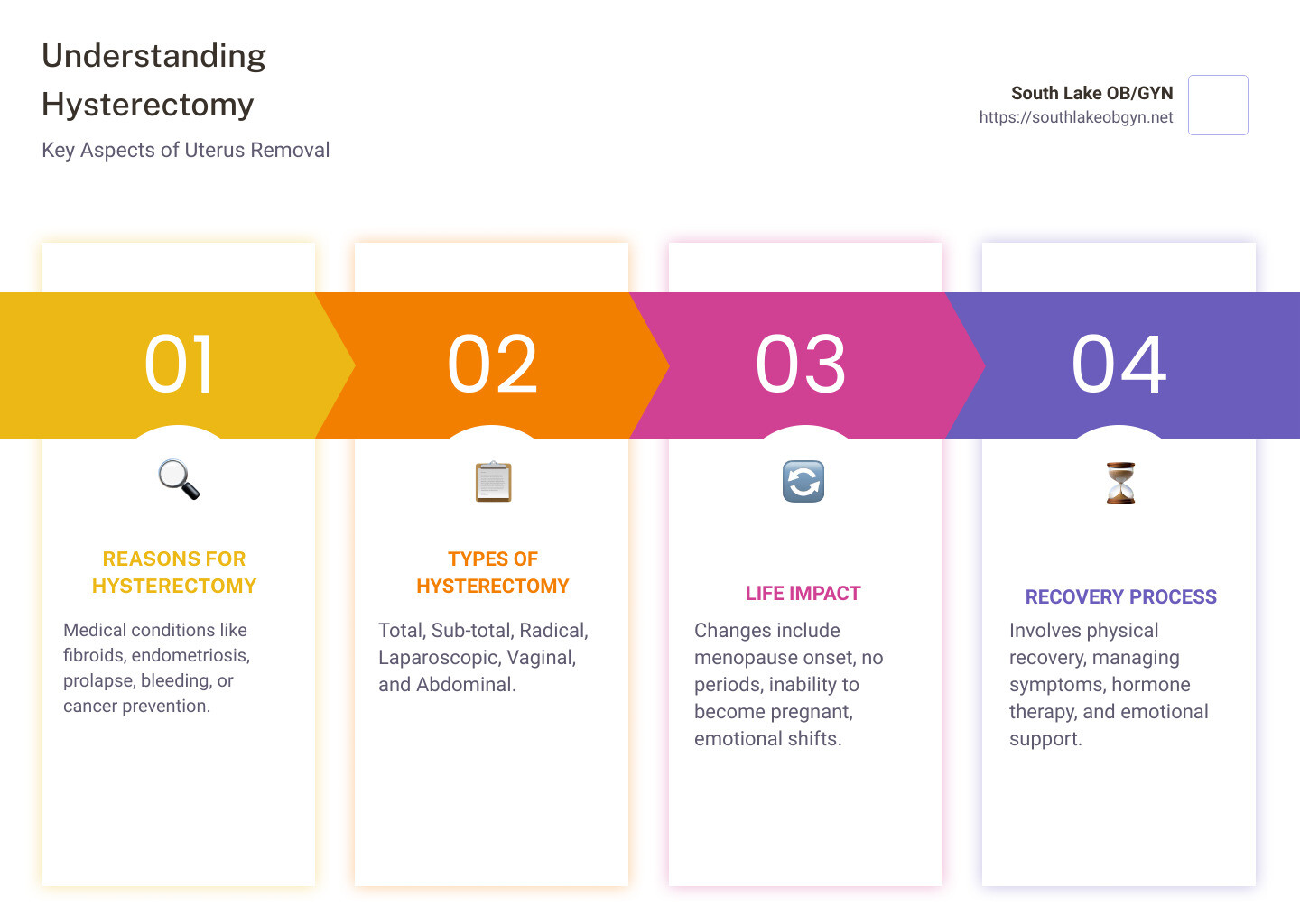
In summary, a hysterectomy is more than just a surgical procedure; it’s a significant decision that involves understanding the reasons behind it, the types available, and the impact on one’s life thereafter. This introduction will guide you through these essential points.
Types of Hysterectomy
When considering uterus removal, it’s crucial to understand the different types of hysterectomy available. Each type has specific indications, techniques, and recovery processes. Let’s break down the common types:
Total Hysterectomy
This is the most frequently performed type of hysterectomy. It involves the removal of the entire uterus, including the cervix. It’s often recommended for conditions like large fibroids, severe endometriosis, or cancer. After a total hysterectomy, you will no longer have menstrual periods and cannot become pregnant.
Subtotal Hysterectomy
Also known as a partial or supracervical hysterectomy, this procedure involves removing the upper part of the uterus while leaving the cervix intact. Some women prefer this option believing it may help maintain sexual function, although research shows mixed results. It’s less invasive but does not eliminate the risk of cervical cancer, so regular Pap tests are still necessary.
Radical Hysterectomy
This extensive procedure is generally reserved for cancer treatment. It involves the removal of the entire uterus, the tissue around the uterus, the cervix, and part of the vagina. Often, lymph nodes and other surrounding tissues are also removed to ensure all cancerous cells are eradicated.
Laparoscopic Hysterectomy
A minimally invasive procedure where small incisions are made in the abdomen to insert a laparoscope (a thin tube with a camera) and surgical tools. This technique results in less pain, quicker recovery, and minimal scarring compared to open surgery. It’s suitable for a variety of conditions, including smaller fibroids and early-stage gynecologic cancer.
Vaginal Hysterectomy
In this procedure, the uterus is removed through an incision made in the vagina. This approach doesn’t require any external cuts, leading to less visible scarring and potentially a quicker recovery. It’s often used for conditions like uterine prolapse or when the uterus is not excessively enlarged.
Abdominal Hysterectomy
This traditional method involves a larger incision in the lower abdomen to remove the uterus. It is often employed when access to the uterus is needed for large fibroids, severe adhesions, or when other pelvic surgeries are performed simultaneously. Despite its invasiveness, it provides the surgeon with a good view and more room to operate.
Each type of hysterectomy has its specific benefits and considerations. The choice of procedure depends on the medical reason for the hysterectomy, the size and position of the uterus, previous surgeries, and overall health. Recovery times and potential complications also vary with the type of surgery performed. Discussing all available options with your healthcare provider will help you make the best decision for your particular situation. This careful planning is essential for a successful recovery and adjustment to life after uterus removal.
Life Changes After Uterus Removal
Menopause
If your ovaries are removed during uterus removal, you will experience immediate menopause. This is different from natural menopause that occurs gradually. Symptoms can include hot flashes, night sweats, and vaginal dryness. These changes happen because your body suddenly stops producing hormones like estrogen and progesterone.
No Periods
One of the most immediate changes after a hysterectomy is the cessation of menstrual periods. For many, this is a relief, especially if they suffered from painful or heavy periods. However, spotting or light bleeding might occur initially as the surgery site heals.
No Pregnancy
Post-hysterectomy, pregnancy is no longer possible. This can be a significant emotional adjustment for women who might have wanted to conceive in the future. It’s crucial to discuss these feelings with a counselor or a support group if they become overwhelming.
Hormonal Changes
Whether or not the ovaries are removed will significantly affect the hormonal balance in your body. If the ovaries remain, they will continue to produce hormones until you reach natural menopause. If removed, you might need hormone replacement therapy (HRT) to manage the sudden loss of ovarian hormones.
Emotional Impact
The emotional response to uterus removal can vary widely. Some women feel relief and improvement in their quality of life, especially if they had significant symptoms before the surgery. Others might experience a sense of loss or grief over the loss of fertility or the change in their body’s natural functions. It’s normal to feel a mix of emotions, and support from healthcare providers, counselors, or peer support groups can be very beneficial.
Navigating these changes requires understanding and support. At South Lake OB/GYN, we are committed to providing comprehensive care to help manage the physical and emotional impacts of life after a hysterectomy. For further assistance, contact our team to discuss any concerns or for more information on coping strategies post-surgery.
In the next section, we will explore how to manage post-hysterectomy symptoms effectively.
Managing Post-Hysterectomy Symptoms
After uterus removal, your body goes through several changes. Managing these symptoms effectively can improve your quality of life and help you recover smoothly. Here’s what you need to know about menopausal symptoms, hormone therapy, physical recovery, and emotional support.
Menopausal Symptoms
If your ovaries were removed during your hysterectomy, you might experience sudden menopause. Common symptoms include:
- Hot flashes
- Mood swings
- Vaginal dryness
- Night sweats
To manage these, consider the following tips:
– Stay Cool: Dress in layers to adjust to temperature changes easily.
– Mind Your Diet: Avoid spicy foods and caffeine, as they can trigger hot flashes.
– Use Lubricants: For vaginal dryness, water-based lubricants can be helpful.
Hormone Therapy
Hormone Replacement Therapy (HRT) may be recommended to alleviate severe menopausal symptoms. This therapy helps balance your hormones and reduce discomfort. Discuss with your doctor whether HRT is a suitable option for you, especially if you experience severe symptoms.
Physical Recovery
Recovery after a hysterectomy varies but generally involves:
– Rest: Give your body time to heal. Avoid strenuous activities and heavy lifting for at least six weeks.
– Gradual Activity: Start with gentle walks and gradually increase your activity level as recommended by your healthcare provider.
– Diet: Eat a balanced diet rich in fruits, vegetables, and lean proteins to aid in healing.

Emotional Support
It’s normal to experience a range of emotions after a hysterectomy. You might feel relief, loss, or grief. Managing these feelings is crucial for your mental health:
– Talk About It: Open up about your feelings with friends, family, or a professional therapist.
– Join a Support Group: Connecting with others who have undergone similar experiences can be incredibly comforting.
At South Lake OB/GYN, we understand the complexity of the emotions and physical changes you face post-hysterectomy. We are here to support you through every step of your recovery journey. For personalized advice and support, reach out to our team.
In the next section, we will answer some frequently asked questions about life after a hysterectomy, helping you understand more about living without a uterus, the impact on sexual function, and more.
Frequently Asked Questions about Hysterectomy
What happens if the ovaries are removed?
When the ovaries are removed during a hysterectomy, a woman will enter menopause immediately, regardless of her age. This sudden onset of menopause can bring about symptoms like hot flashes, night sweats, and vaginal dryness. To manage these symptoms, hormone replacement therapy (HRT) might be recommended. HRT can help mitigate the abrupt drop in hormone levels and ease the transition.
Can you live a normal life without a uterus?
Absolutely! Many women lead full, active lives after uterus removal. While the surgery does mean you can no longer become pregnant, it doesn’t restrict your ability to engage in physical activities. In fact, many women report an improvement in quality of life as symptoms that led to the hysterectomy, such as severe pain or heavy bleeding, are alleviated. It’s important to follow post-operative care instructions and give your body time to heal, but after recovery, most activities can be resumed.
How does hysterectomy affect sexual function?
The impact of a hysterectomy on sexual function can vary. Some women experience a decrease in libido and increased vaginal dryness, which can make intercourse uncomfortable. However, many report no change or even an improvement in sexual satisfaction after recovery. This improvement is often due to the relief from the pain or heavy periods that might have necessitated the hysterectomy in the first place. Using lubricants can help manage vaginal dryness, and open communication with your partner is crucial.
In summary, removing the ovaries triggers menopause, but symptoms can be managed effectively with HRT. Living without a uterus does not stop you from enjoying a high quality of life and engaging in physical activities. And while changes in sexual function can occur, many women see an improvement in their sexual life post-hysterectomy.
For further guidance and support, consider consulting with healthcare providers at South Lake OB/GYN who can provide personalized care tailored to your recovery needs. Contact us today for more information.
Recovery and Care Post-Hysterectomy
After a hysterectomy, taking care of your body is crucial for a smooth and effective recovery. Here are essential tips on rest, exercise, diet, avoiding heavy lifting, and sexual activity.
Rest
Give your body time to heal. Initially, you should rest as much as possible. It’s normal to feel fatigued, so listen to your body and don’t rush your recovery. Aim for at least 8 hours of sleep per night and take naps if needed during the day.
Exercise
Start slow and build up gradually. Begin with light activities like walking around your home. After a few weeks, depending on how you feel and your doctor’s advice, you can slowly increase the duration and intensity of your walks. Avoid any strenuous exercise or sports until your doctor gives you the green light.
Diet
Eat nutritious foods to aid recovery. Focus on a balanced diet rich in fruits, vegetables, lean proteins, and whole grains. These foods are essential for healing. Drink plenty of water to stay hydrated and help flush out toxins. Avoid processed foods and those high in sugar, as they can hinder your recovery process.
Avoiding Heavy Lifting
Protect your surgical site by not lifting anything heavier than 10 pounds for at least six weeks. Lifting heavy objects can strain your incisions and internal sutures, leading to complications. If you need to pick something up, squat down and use your legs and knees, not your waist or back.
Sexual Activity
Follow your doctor’s guidelines regarding resuming sexual activity. Typically, it’s advised to wait until after your post-operative checkup, which can be around six weeks. This waiting period allows your incisions to heal and reduces the risk of infection. If you experience dryness or discomfort during sex, consider using a water-based lubricant.
Remember, everyone’s recovery from uterus removal can vary. It’s important to follow the specific instructions given by your healthcare provider at South Lake OB/GYN. For more detailed guidance or if you have any concerns during your recovery, contact us. Our team is here to support you every step of the way, ensuring your return to daily activities is as safe and comfortable as possible.
Conclusion
At South Lake OB/GYN, we understand that the decision to undergo uterus removal is significant and often comes after careful consideration of many factors. Our goal is to ensure that you not only survive but thrive after your hysterectomy, experiencing substantial improvements in your quality of life.
Life Improvement After Hysterectomy
Many of our patients report a significant reduction in the symptoms that led them to consider a hysterectomy in the first place. Whether it was due to painful fibroids, heavy menstrual bleeding, or other gynecological issues, the relief from these symptoms often leads to a better overall quality of life. Studies and patient testimonials suggest improvements in physical, emotional, and psychological well-being following a hysterectomy.
For those who have undergone a hysterectomy as part of cancer treatment, the surgery can be life-saving. It offers a path forward, free from the pain and anxiety that cancer or the risk of cancer can cause. It’s about reclaiming your health and your future.
Our Commitment at South Lake OB/GYN
Our team at South Lake OB/GYN is dedicated to supporting you before, during, and after your hysterectomy. We pride ourselves on providing comprehensive care tailored to your individual needs. From the initial consultation to your recovery process, our healthcare professionals are here to guide and support you.
We utilize state-of-the-art surgical techniques, including minimally invasive options that promote faster healing and less discomfort. Our approach ensures that you receive the best possible care in a compassionate and understanding environment.
For those considering or recovering from a hysterectomy, you are not alone. Our team is committed to providing you with the resources, care, and support you need to navigate this journey successfully.
Explore more about your options and what to expect at our dedicated service page on Hysterectomy vs. Hysteroscopy. Here, you can find detailed information that will help you make an informed decision and prepare for life after a hysterectomy. We are with you every step of the way, ensuring a path forward that’s both healing and hopeful.