


Introduction
Are you worried about the signs of aging under your eyes? Dermal filler under eyes is a popular solution to address those concerns. Let’s start by quickly addressing what you might be looking for:
- Aging Signs: Fine lines, dark circles, and sagging skin under the eyes.
- Under-Eye Hollows: Loss of volume leading to a tired appearance.
- Concealer Alternatives: You can use dermal fillers instead of or alongside makeup.
- Dermatologist Consultation: Essential for understanding the best treatment options for you.
As we age, our eyes are one of the first places to show signs of time’s passage. You may have noticed fine lines appearing at the corners, dark shadows under your lower lids, or even hollows that make you look perpetually tired. Makeup can only go so far, and when you’re ready for a lasting solution, turning to a dermatologist for dermal fillers might be your next step.
Dermal fillers, particularly those used under the eyes, offer a non-invasive way to rejuvenate your appearance. They work by restoring lost volume, smoothing out hollows, and reducing the look of dark circles. The process is quick, usually done in a doctor’s office, and the results can be seen almost immediately.
Hello, I’m Matthew Casavant. With experience in medical procedures and a specialization in advanced cosmetic treatments, I’m passionate about helping you look and feel your best. My focus has been on treatments like dermal filler under eyes, ensuring natural and satisfying results for all patients.
How Faces Change With Age
Aging affects our faces in several ways. Here’s how:
Loss of Elasticity
As we age, our skin loses its elasticity. This means it doesn’t bounce back like it used to. The connective tissue weakens, making the skin less firm and more prone to sagging.
Skin Sagging
With less elasticity, skin starts to droop. Not just on the face but also around the nose and cheeks. The cartilage in your nose also loses firmness, causing it to hang lower.
Fatty Deposits Shift
Gravity pulls everything down, including the fat under your skin. This shift changes the shape of your face. Fat moves from areas like the cheekbones and chin, making features less defined. Some areas become more hollow, while others look puffy.
Deep Hollows
The area under your eyes is one of the first to show these changes. Fat loss here creates deep hollows, making shadows more noticeable. This can make you look tired or older than you are.
Discoloration and Shadows
Changes in fat and skin thickness can also lead to discoloration. The hollows under your eyes can look darker because of shadows and visible veins. This contributes to a tired and worn-out appearance.
Understanding these changes can help you decide on treatments like dermal filler under eyes to restore a youthful look.
What Are Dermal Fillers?
Dermal fillers are injectable treatments designed to replace lost volume in your skin. They are popular cosmetic procedures because they offer immediate results and require minimal recovery time.
Types of Dermal Fillers
There are several types of dermal fillers, each with unique properties. Here are the most common ones:
Calcium Hydroxylapatite
Calcium Hydroxylapatite (like Radiesse) is a mineral-like compound found in human bones. It’s used to fill moderate-to-severe wrinkles and folds, such as nasolabial folds. This type of filler provides natural-looking results and can stimulate collagen production, but it’s not typically used for the under-eye area.
Hyaluronic Acid
Hyaluronic Acid fillers (like Juvederm and Restylane) are the most common type. Hyaluronic acid is a substance naturally found in your skin that helps keep it hydrated and plump. These fillers are versatile and can be used for various facial areas, including under the eyes. They provide immediate results and can last from 6 to 12 months.
Polyalkylimide
Polyalkylimide (like Aquamid) is a semi-permanent filler used by plastic surgeons. It’s biocompatible, meaning it doesn’t react with human tissue. This type of filler is often used for deeper wrinkles, enhancing cheekbones, and plumping thin lips. However, it’s not typically recommended for the delicate under-eye area.
Polylactic Acid
Polylactic Acid (like Sculptra) stimulates your body to produce its own collagen. It’s used for filling laugh lines, plumping lips, and treating deep nasolabial folds. The results appear gradually over a few months and can last up to two years. This filler is less commonly used under the eyes due to its gradual nature.
Polymethyl-Methacrylate Microspheres
Polymethyl-Methacrylate (PMMA) (like Bellafill) is a semi-permanent filler. It contains collagen and tiny PMMA beads that remain under the skin to provide support. This type of filler is used for treating deep wrinkles and scars. It’s considered more permanent but isn’t typically used for under-eye treatments due to its robust nature.
Each type of filler has its own strengths and is suited to different areas of the face. For under-eye treatments, hyaluronic acid fillers like Juvederm and Restylane are often preferred due to their safety and effectiveness.
Next, let’s explore the specific benefits of using dermal filler under eyes and what you can expect from the procedure.
Dermal Fillers Under Eyes
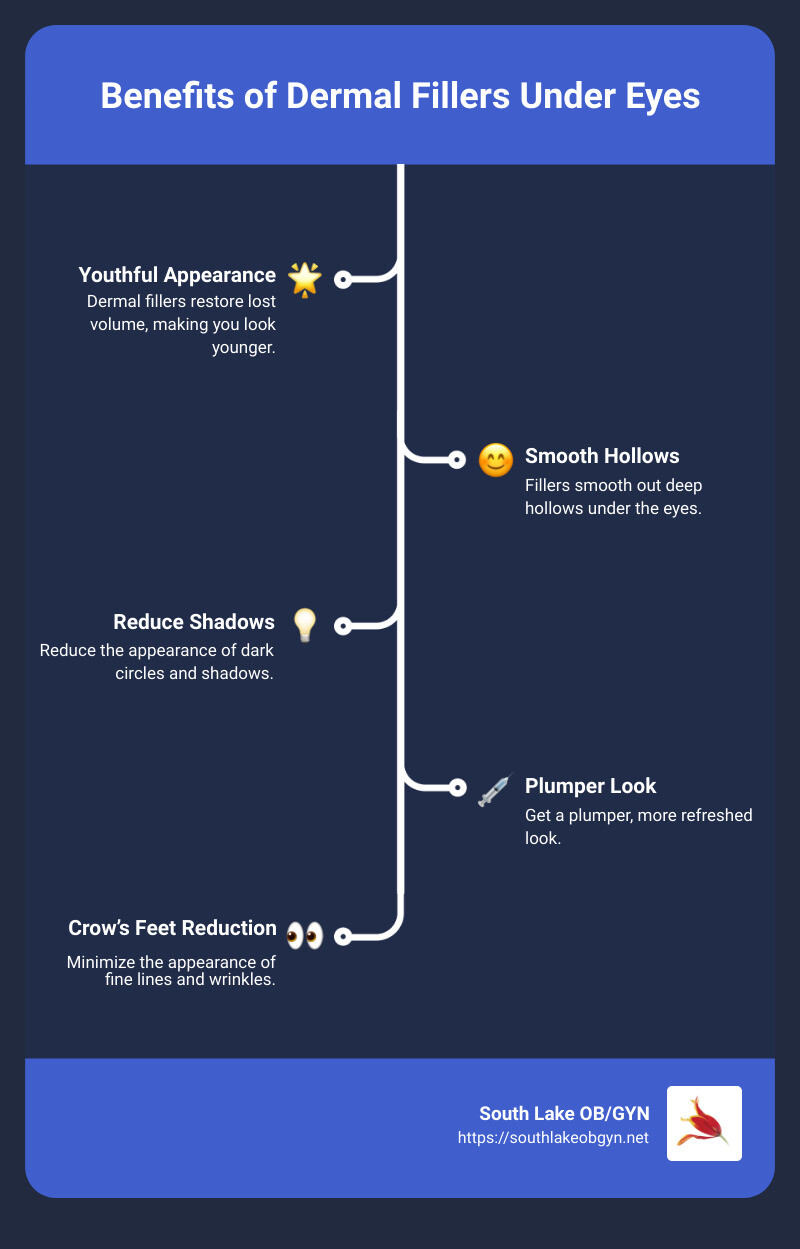
Benefits of Dermal Fillers Under Eyes
Dermal fillers under the eyes offer a range of benefits that can make a significant difference in your appearance. Here are some key advantages:
Volume Restoration: As we age, we lose volume in our face, especially under the eyes. This can lead to a sunken or hollow look. Hyaluronic acid dermal fillers under eyes can restore lost volume, giving you a more youthful and refreshed appearance. According to Dr. Desmond Shipp, a board-certified dermatologist, these fillers can fill the hollowness under the eyes, making the area look fuller and more even.
Dark Circles Reduction: Dark circles can make you look tired and older than you are. Often, these dark circles are caused by shadows created by hollows under the eyes. By using fillers to fill in these hollows, you can reduce the appearance of dark circles. Some people mistakenly believe their dark circles are due to skin discoloration when they are actually caused by shadowing. A consultation with an experienced provider can help determine the true cause and the best treatment.
Wrinkle Smoothing: Fine lines and wrinkles under the eyes can be smoothed out with hyaluronic acid dermal fillers. These fillers plump the skin, reducing the appearance of wrinkles. However, other treatments like Botox or Ultherapy might be better suited for certain types of wrinkles, so an assessment by a qualified practitioner is essential.
Immediate Results: One of the most appealing benefits of under-eye fillers is the immediate improvement you can see. The filler adds volume right away, so you’ll notice a difference as soon as the procedure is done. Full results are typically visible within two to three weeks after the treatment, once any swelling and bruising have subsided.
Longevity: Under-eye fillers are not a permanent solution, but they do offer long-lasting results. Depending on the type of filler used, the results can last anywhere from 6 to 12 months. For instance, Dr. Shipp notes that Juvederm can last about 9 to 12 months. This means you won’t need frequent touch-ups to maintain your refreshed look.
These benefits make under-eye fillers a popular choice for those looking to improve their appearance without undergoing surgery.
Popular Dermal Fillers for Under Eyes
When it comes to choosing a dermal filler for under the eyes, several options have proven to be effective. Here are some of the most popular ones:
Belotero Balance: This filler is known for its ability to integrate smoothly into the skin, making it ideal for delicate areas like under the eyes. It helps in reducing fine lines and providing a natural look.
Restylane Silk: Restylane Silk is designed for precision and smoothness, making it a great choice for filling in the fine lines and hollows under the eyes. It provides a subtle plumping effect and smooth texture.
Juvederm Ultra: Juvederm Ultra is a versatile filler that can be used for various facial areas, including under the eyes. It offers a good balance of volume and longevity, lasting up to a year with optimal treatment.
Juvederm Volbella XC: According to clinical studies, Juvederm Volbella XC is the first and only hyaluronic acid filler FDA-approved for adding volume to improve the appearance of undereye hollows. It helps achieve a less-tired look by creating a smooth transition from the undereye area to the cheek area.
Restylane Eyelight: Specifically designed for the under-eye area, Restylane Eyelight helps to reduce dark circles and hollows, providing a refreshed and youthful appearance.
Choosing the right filler can depend on various factors, including your specific needs and the expertise of your provider. Always consult with a qualified specialist to determine the best option for you.
Next, let’s dive into the procedure and aftercare to understand what you can expect during and after getting dermal fillers under your eyes.
Procedure and Aftercare
Preparing for Your Appointment
Consultation: Before your procedure, you’ll have a consultation with your dermatologist. This is the time to discuss your goals and any concerns. Your doctor will review your medical history and examine your under-eye area to ensure the treatment is right for you.
Limit Blood Thinners: About a week before your appointment, stop taking blood thinners like aspirin, ibuprofen, and other NSAIDs. These can increase the risk of bruising. Also, avoid supplements like ginkgo biloba, ginseng, fish oil, St. John’s Wort, and vitamin E.
Inspiration Photos: Bring photos of what you hope to achieve. This helps your doctor understand your expectations.
Normal Meals: Eat normally before your appointment. There’s no need to fast.
Avoid Alcohol: Steer clear of alcohol for at least 24 hours before your treatment. Alcohol can thin your blood and increase bruising.
Post-Procedure Care
Apply Ice: After the procedure, apply ice packs to your under-eye area for 5 to 10 minutes every hour. This helps reduce swelling.
Sleep Elevated: For the first two nights, sleep with your head elevated above your heart. This helps minimize swelling.
Avoid Makeup: Don’t apply makeup or lotions to the treated area for at least 4 hours post-procedure. This helps prevent infection.
Avoid Swimming: Stay out of pools and saunas for 48 hours. Water and heat can increase the risk of infection and swelling.
Avoid Rubbing: Don’t rub or massage your under-eye area for 48 hours. This ensures the filler settles properly.
Immediate Results: You’ll notice changes right away, but full results will be visible after about 4 weeks. Swelling and bruising may occur but will subside over time.
Following these steps will help you achieve the best results and ensure a smooth recovery. Next, let’s explore the potential risks and side effects you should be aware of.
Risks and Side Effects
Getting dermal filler under eyes is a great way to look refreshed, but it’s important to know about possible risks and side effects. Here’s what you should be aware of:
Bruising and Swelling
Bruising and swelling are common after getting fillers. Most people see these side effects subside within a week or two. To minimize bruising, avoid blood-thinning medications like aspirin and ibuprofen before your procedure. Ice packs can help reduce swelling.
Nodules and Bumps
Sometimes, small nodules or bumps can form under the skin. These usually go away on their own. If they persist, gentle massage might help. In rare cases, your doctor may use hyaluronidase to dissolve the filler.
Blindness Risk
Though extremely rare (about 0.001% of cases), there is a risk of blindness if the filler enters a blood vessel near the eye. This makes it crucial to see an experienced, board-certified injector.
Malar Edema
Malar edema is swelling around the cheekbones and can happen if filler is placed too superficially. This swelling can last for a few days to weeks.
Tyndall Effect
The Tyndall effect occurs when filler is placed too close to the skin surface, causing a bluish tint. This can be corrected with hyaluronidase to dissolve the filler.
Infection
Infection is rare but possible. Signs include redness, warmth, tenderness, and swelling. If you notice these symptoms, contact your doctor immediately. Proper cleaning of the skin before the procedure helps minimize this risk.
Delayed Swelling
Delayed swelling can occur weeks or months after the procedure. This is uncommon and usually resolves on its own. However, medication can be given to help reduce swelling.
Vascular Occlusion
Vascular occlusion happens when filler blocks a blood vessel, cutting off blood flow. This is serious and can lead to tissue damage. Symptoms include severe pain and pale skin. Immediate treatment with hyaluronidase is required to dissolve the filler and restore blood flow.
Managing Side Effects
- Hyaluronidase for Reversal: This enzyme can dissolve hyaluronic acid fillers if complications occur.
- Radiofrequency Technology: Sometimes used to treat lumps and bumps.
- Lymphatic Drainage: Gentle massage techniques can help reduce swelling.
- Medication for Swelling: Anti-inflammatory medications may be prescribed to manage swelling.
Understanding these risks and side effects can help you make an informed decision. Always discuss these with your healthcare provider before proceeding with treatment.
Next, let’s dive into some frequently asked questions to address common concerns about under-eye fillers.
Frequently Asked Questions about Dermal Fillers Under Eyes
How long do dermal fillers last under eyes?
Under-eye fillers typically last between 9 to 12 months. However, this can vary based on individual factors such as metabolism, lifestyle, and skin type. Since the under-eye area doesn’t move as much as other parts of the face, fillers here can sometimes last up to 18 months. Everyone’s body processes fillers differently, so the exact duration can vary from person to person.
Is dermal filler good for under eyes?
Yes, dermal filler under eyes can be highly effective for addressing several issues:
- Wrinkles Remedy: Fillers can smooth out fine lines and wrinkles, giving a more youthful appearance.
- Sagging Skin: By adding volume, fillers can lift sagging skin and reduce the appearance of tiredness.
- Hollows Improvement: Fillers can fill in the hollow areas under the eyes, minimizing dark circles and shadows.
Dr. Peredo, a board-certified dermatologist, mentions that under-eye fillers can significantly reduce the appearance of deep tear troughs, which often contribute to a tired or aged look.
How much does under eye filler cost?
The cost of under-eye fillers can vary widely, typically ranging from $600 to $2,000 per session. On average, most people spend between $950 to $1,600 per procedure. Factors influencing the cost include:
- Geographical Variation: Prices can be higher in larger cities or more affluent areas.
- Practitioner’s Expertise: More experienced practitioners may charge higher fees.
- Type of Filler Used: Different fillers come with different price tags.
In Indian Rupees, the cost generally falls between INR 20,000 to 30,000 per session, but this can vary based on location and the specialist’s experience.
By understanding these common questions and their answers, you can better prepare for your under-eye filler journey. For more personalized advice, consult with a qualified healthcare provider at South Lake OB/GYN.
Conclusion
At South Lake OB/GYN, we understand that choosing to undergo a cosmetic procedure like dermal filler under eyes is a big decision. That’s why we prioritize personalized care tailored to your unique needs and concerns.
Our team of experts, led by skilled professionals, is dedicated to ensuring that you receive the safest and most effective treatments available. We focus on creating a natural, refreshed look while maintaining your health and peace of mind.
From your initial consultation to the follow-up appointments, we are with you every step of the way. Our specialists take the time to understand your goals and address any fears you may have. We provide thorough aftercare instructions and are always available to answer any questions or concerns.
We use only FDA-approved hyaluronic acid dermal fillers, which are safe, effective, and easily reversible if needed. This ensures that you get the best results without compromising your well-being.
Our patients have experienced remarkable transformations with under-eye fillers. Before and after photos show the dramatic improvements in volume restoration, reduction of dark circles, and wrinkle smoothing. These real results highlight the effectiveness of our treatments and the expertise of our team.
Our commitment to your satisfaction extends beyond the treatment room. We provide ongoing support to ensure your journey to recovery is smooth and that your results are maintained. This continuous care helps you look and feel your best with confidence.
If you’re ready to rejuvenate your look with under-eye filler, we invite you to schedule your consultation with us. Let us help you achieve a natural, refreshed appearance safely and effectively.
Your health and satisfaction are our top priorities. We look forward to helping you on your journey to enhanced beauty and confidence.