


Managing Back Pain During Pregnancy: Tips and Tricks
Back discomfort during pregnancy is a common complaint, affecting more than half of all expecting mothers. If you’re dealing with this issue, here are the quick essentials you need to know:
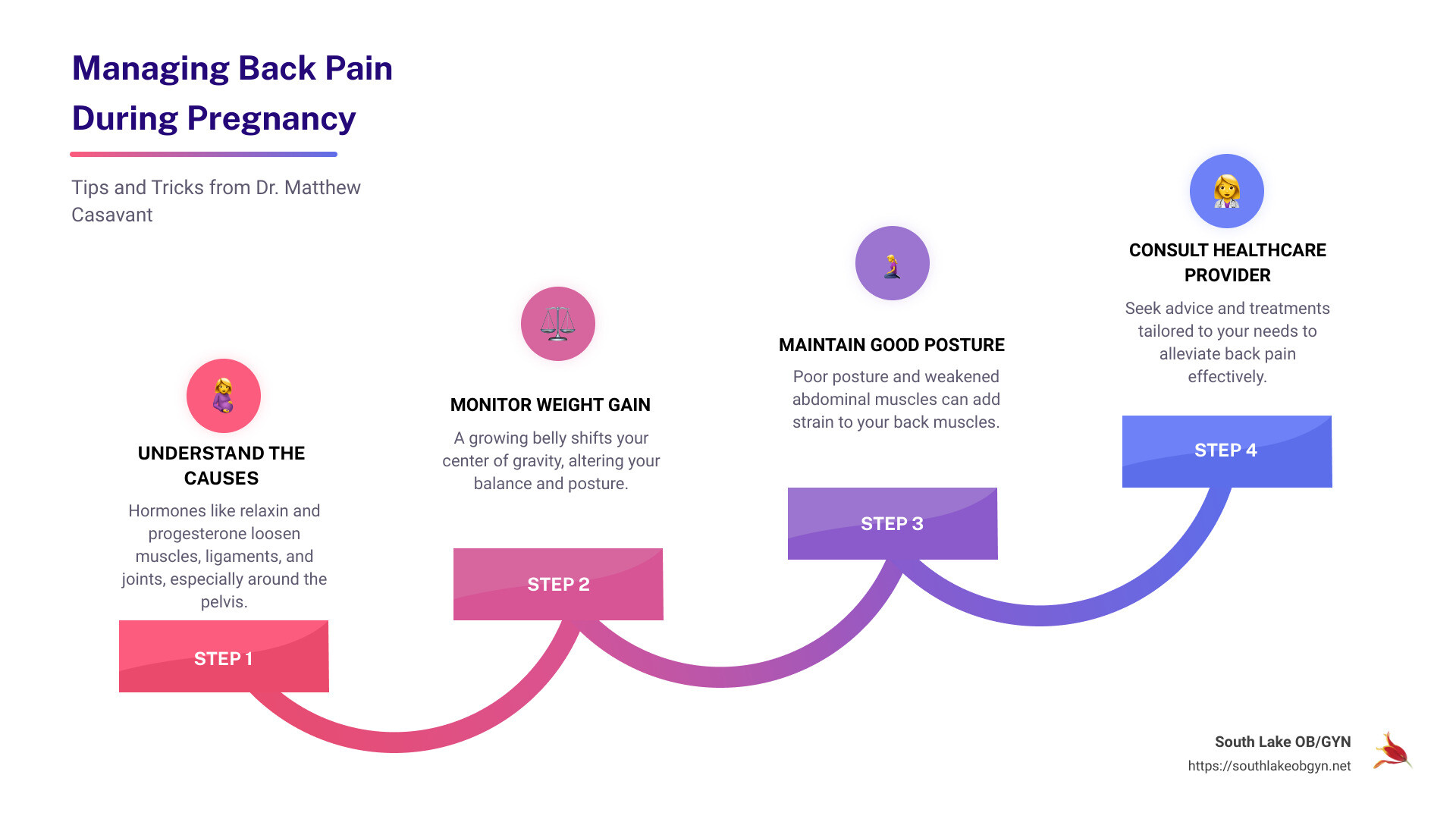
- Hormones like relaxin and progesterone loosen muscles, ligaments, and joints, especially around the pelvis.
- Weight gain and growing belly shift your center of gravity, altering your balance and posture.
- Poor posture and weakened abdominal muscles can add strain to your back muscles.
Most women experience back pain as their pregnancy progresses due to these changes.
Hello, I’m Dr. Matthew Casavant, a specialist in obstetric care with over 20 years of experience in addressing back discomfort during pregnancy. I aim to provide you with the best insights and solutions to manage this common issue. Let’s dive deeper into the causes and solutions for back discomfort during pregnancy.
Causes of Back Discomfort During Pregnancy
Back discomfort during pregnancy is a common issue. Understanding the causes can help you manage and prevent it.
Hormones: Relaxin and Progesterone
Hormones play a huge role during pregnancy. Two key hormones, relaxin and progesterone, are particularly important. Relaxin helps to loosen the ligaments and joints in the pelvis, preparing your body for childbirth. However, this can also make your back less stable, leading to pain.
Progesterone, on the other hand, relaxes muscles throughout your body. While this is essential for a healthy pregnancy, it can also contribute to back discomfort by reducing muscle support for your spine.
“Relaxin and progesterone are vital for pregnancy but can cause back pain by loosening ligaments and relaxing muscles,” says Dr. Larish from the Mayo Clinic.
Center of Gravity and Posture
As your uterus grows, your center of gravity shifts forward. This shift can make you adjust your posture, often leading to an exaggerated curve in your lower back, known as lordosis. This posture change can strain your back muscles, causing discomfort.

Weight Gain
Gaining weight is a natural part of pregnancy. However, the extra pounds, especially around your abdomen, can put additional pressure on your back. This added weight can pull your lower spine forward, increasing the strain on your back muscles.
According to a study in the British Journal of Sports Medicine, “50 to 70 percent of women experience back pain at some point during their pregnancy due to weight gain.”
Abdominal Muscles
Your abdominal muscles also play a crucial role in supporting your spine. As your belly grows, the two sheets of abdominal muscle that run from your rib cage to your pubic bone can begin to separate. This condition, known as diastasis recti, weakens your core and places more strain on your back.
In summary, the combination of hormonal changes, shifts in your center of gravity, weight gain, and weakening abdominal muscles can all contribute to back discomfort during pregnancy. Understanding these causes can help you take steps to manage and alleviate the pain.
Next, we will explore some effective methods for preventing back pain during pregnancy.
Preventing Back Pain During Pregnancy
Proper Body Mechanics
Using proper body mechanics can help prevent back discomfort during pregnancy.
When lifting small objects, make sure you have stable footing. Squat down with a wide stance and bend your knees. Keep your back straight and lift with your legs, not your back. Avoid bending at the waist. Always ask for help if needed.
Good Posture
Good posture is key to avoiding back pain. Here are some tips:
Standing: Stand up straight and tall. Hold your chest high and keep your shoulders back and relaxed. Keep your knees slightly bent and maintain a wide stance for balance. If you need to stand for long periods, rest one foot on a low step stool to reduce strain.
Sitting: Choose a chair that supports your back. Use a small pillow or lumbar support cushion behind your lower back. This helps maintain the natural curve of your spine.
Supportive Shoes
Wearing the right shoes can make a big difference. Opt for low-heeled shoes with good arch support. Walking or athletic shoes are great choices. Avoid high heels, as they can shift your balance forward and strain your lower back.
Sleep Positions
Sleeping in the right position can also help prevent back pain. Many pregnant people find that sleeping on their side is most comfortable.
- Side Sleeping: Keep one or both knees bent. Use pregnancy or support pillows between your knees, under your stomach, and behind your back. Full-length body pillows can also be helpful.
By following these tips, you can take proactive steps to prevent back pain during pregnancy. Proper body mechanics, good posture, supportive shoes, and the right sleep positions can all contribute to a more comfortable pregnancy.
Next, we will discuss effective methods for relieving back pain if it does occur.
Relieving Back Pain During Pregnancy
Heat and Cold Therapy
Applying heat or cold can work wonders for back discomfort during pregnancy.
Heating Pad: Use a heating pad on the lowest temperature setting. Wrap it in a towel to avoid burns. This can help soothe sore muscles.
Warm Water Bottle: A warm water bottle wrapped in a towel can also provide relief.
Ice Pack: If heat isn’t your thing, try an ice pack. Wrap it in a towel to protect your skin and apply it to the painful area.
Massage
A good massage can be a real game-changer.
Professional Massage: Consider getting a professional prenatal massage. Many moms-to-be find this incredibly relaxing.
Self-Massage Techniques: If a professional massage isn’t an option, try some self-massage techniques. Gently rub your lower back or use a tennis ball against a wall for some DIY relief.
Supportive Garments
Supportive garments can take some of the strain off your back.
Maternity Girdle: A maternity girdle or abdominal support garment can help. They distribute the weight of your belly, reducing back strain.
Wide Elastic Band Maternity Pants: These pants have a wide elastic band that goes under your belly, offering extra support.
Exercises
Staying active is key to managing back pain.
Prenatal Yoga: Prenatal yoga focuses on gentle stretching and breathing exercises. It can help relieve tension and improve flexibility.
Aquanatal Classes: Water exercises are great because the water supports your weight, reducing strain on your back.
Back Exercises: Specific back exercises can strengthen your muscles and provide relief. Always check with your healthcare provider before starting any new exercise routine.
Walking: Walking is generally safe and great for your back. Wear supportive shoes to avoid extra strain.
Water Exercise: Swimming or water aerobics can be especially helpful. The water supports your weight and eases muscle strain.
Next, we will discuss when to seek medical help for back pain during pregnancy.
When to Seek Medical Help
Back discomfort during pregnancy is common, but sometimes it can be a sign of something more serious. Knowing when to seek medical help is crucial for your and your baby’s health.
Signs of Preterm Labor
If you experience back pain along with other symptoms, it could indicate preterm labor. Preterm labor happens before 37 weeks of pregnancy and requires immediate medical attention. Look out for:
- Cyclical Pain: Pain that comes and goes in regular intervals.
- Uterine Contractions: These feel like tightening or cramping in the lower abdomen.
- Vaginal Bleeding: Any amount of bleeding should be reported to your healthcare provider.
- Change in Vaginal Discharge: An increase in discharge or a change in its consistency could be a warning sign.
If you notice any of these symptoms, contact your healthcare provider immediately.
Urinary Tract Infection Symptoms
Back pain can also be a symptom of a urinary tract infection (UTI). UTIs are common during pregnancy and need prompt treatment. Symptoms to watch for include:
- Fever: A fever can indicate an infection.
- Burning During Urination: Pain or a burning sensation when you urinate is a key sign of a UTI.
- Back Pain: Particularly in the lower back, which may indicate the infection has spread to the kidneys.
If you experience these symptoms, seek medical help to get the appropriate treatment.
Other Warning Signs
Besides preterm labor and UTIs, other symptoms that require medical attention include:
- Severe Pain: If your back pain is severe and doesn’t improve with rest or simple remedies, it’s time to see a doctor.
- Fever: A fever along with back pain can indicate an infection.
- Vaginal Bleeding: Any amount of bleeding should be reported immediately.
- Pain When Urinating: This could be a sign of a UTI or other issue.
Always trust your instincts. If something doesn’t feel right, don’t hesitate to contact your healthcare provider. Your well-being and your baby’s health are the top priorities.
Next, we will address some frequently asked questions about back discomfort during pregnancy.
Frequently Asked Questions about Back Discomfort During Pregnancy
When should I worry about back pain in pregnancy?
Back pain is common during pregnancy, but certain symptoms require immediate attention. If you experience severe pain, it could be a sign of a more serious issue, such as preterm labor. Preterm labor might also present as cyclical pain or uterine contractions.
Vaginal bleeding is another red flag. Any amount of bleeding should be reported to your healthcare provider right away. This could indicate a placental issue or the early rupture of waters.
Lastly, if you notice a change in vaginal discharge or fever, these could be signs of a urinary tract infection or another infection. Always consult your doctor if you have these symptoms.
How can I relieve back pain during pregnancy?
There are several ways to manage and relieve back discomfort during pregnancy:
Heat and Cold Therapy: Use a heating pad set to the lowest temperature or a warm water bottle. For cold therapy, an ice pack wrapped in a towel can help reduce inflammation.
Massage: A gentle back massage can ease muscle tension. You can also seek professional prenatal massage services.
Supportive Garments: Wearing a maternity girdle or abdominal support garment can provide extra support to your back.
Rest: Taking breaks and resting when needed can prevent overexertion.
Exercises: Engage in prenatal yoga, walking, or water exercises. These activities strengthen back muscles and improve flexibility.
Can you use a heating pad on your back while pregnant?
Yes, you can use a heating pad on your back during pregnancy, but with caution. Set it to the lowest temperature and always wrap it in a towel to avoid direct contact with your skin. This ensures safe use and prevents overheating, which can be harmful to both you and your baby.
Conclusion
At South Lake OB/GYN, we understand that back discomfort during pregnancy can be challenging. Our goal is to provide personalized care tailored to your unique needs. We create a supportive environment where you can openly discuss your symptoms and concerns.
Our experienced healthcare providers are dedicated to guiding you through effective pain management strategies. From gentle exercises to safe pain relief methods, we are here to help you every step of the way.
We believe in the importance of open communication and fostering a family-like atmosphere. Whether it’s your first pregnancy or you’re adding to your family, we are committed to ensuring a smooth and comfortable pregnancy journey for you.
For more information or to schedule an appointment, visit our Obstetrics Services page. We’re here to support you in enjoying a healthy and happy pregnancy.