


The Best Herbs for Uterine Health: A Natural Guide to Wellness
Caption: Find the natural power of herbs to support your uterine health and overall well-being.
Filename: uterine_health_herbs_header.jpg
The best herbs for uterine health can be powerful allies in supporting your reproductive wellness naturally. Here are the top herbs that deserve consideration:
Top Herbs for Uterine Health:
- Red Raspberry Leaf – Strengthens uterine muscles and eases menstrual cramps
- Nettle Leaf – Rich in iron and minerals, supports heavy menstrual flow
- Vitex (Chasteberry) – Balances hormones and regulates menstrual cycles
- Ginger – Reduces menstrual pain and inflammation
- Turmeric – Powerful anti-inflammatory for endometriosis support
- Chamomile – Calms cramps and reduces PMS symptoms
Your uterine health plays a central role in your overall well-being. This remarkable organ doesn’t just manage your menstrual cycle – it impacts your energy levels, mood, and quality of life. When your uterus is healthy, you feel balanced and strong.
But many women struggle with common uterine conditions like PMS, endometriosis, fibroids, and hormonal imbalances. These issues can cause painful periods, irregular cycles, heavy bleeding, and emotional ups and downs that affect daily life.
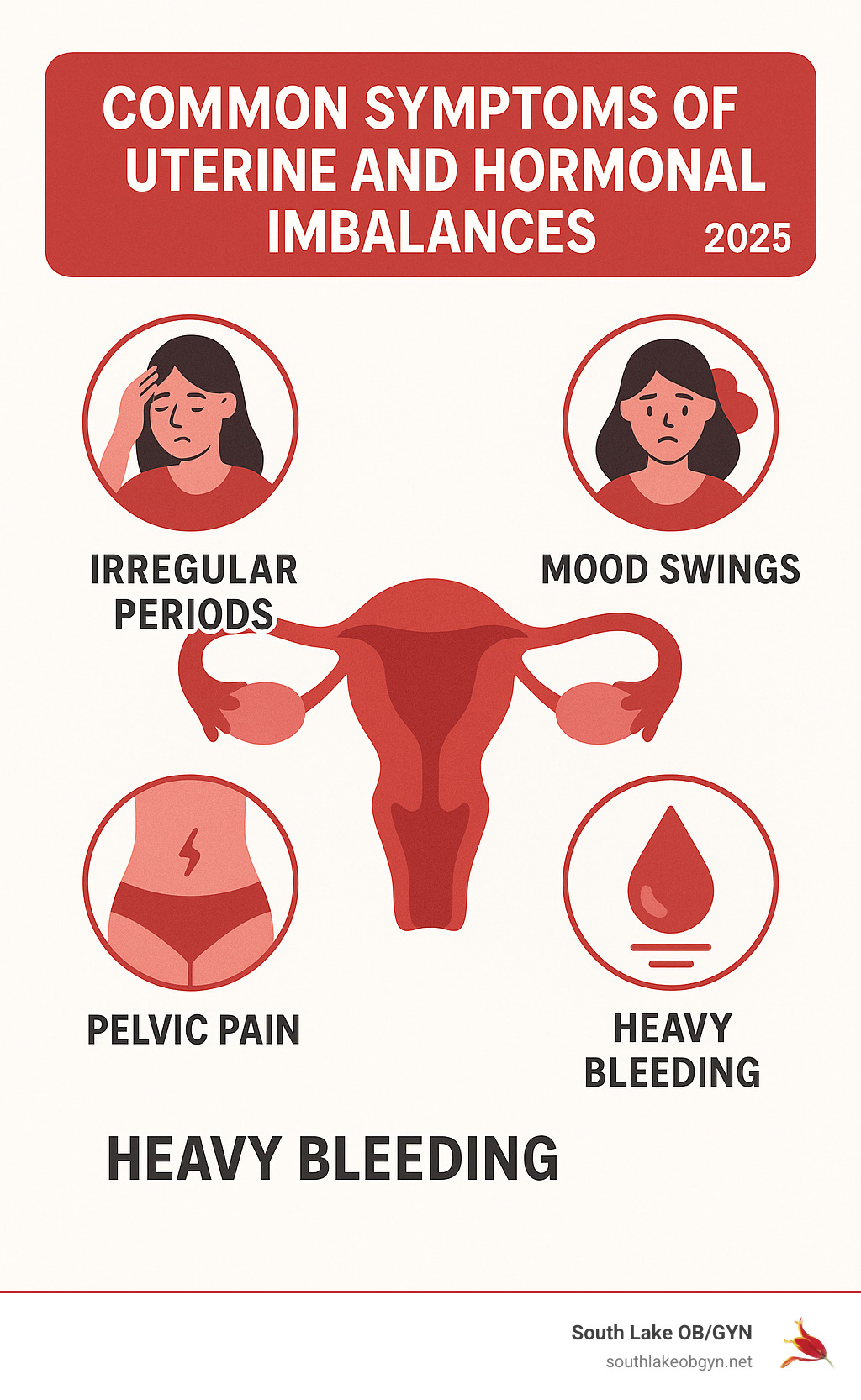
Caption: Understanding the common symptoms of uterine and hormonal imbalances is the first step towards better health.
Nature offers gentle yet effective support through herbs that have been used for centuries. These plant allies work with your body’s natural healing processes, helping to reduce inflammation, balance hormones, and strengthen uterine tissues.
As Dr. Matthew Casavant, I’ve spent over 20 years helping women steer their reproductive health challenges, and I’ve seen how the best herbs for uterine health can complement conventional treatment beautifully. My holistic approach combines medical expertise with natural healing options to give you the most comprehensive care possible.
Essential best herbs for uterine health terms:
The Best Herbs for Uterine Health and Hormonal Balance

Caption: Red Raspberry Leaf is a beloved herb for uterine health, often enjoyed as a comforting tea.
Filename: red_raspberry_leaf_tea.jpg
When we talk about the best herbs for uterine health, certain plants consistently rise to the top. These aren’t just old wives’ tales; many have a long history of traditional use and are increasingly backed by modern understanding. Let’s explore some of our favorites.
Red Raspberry Leaf: The Quintessential Herb for Uterine Health
If there’s one herb that comes to mind when we discuss uterine support, it’s Red Raspberry Leaf (Rubus idaeus). This powerhouse is often hailed as “the woman’s herb” for good reason. It acts as a phenomenal uterine tonic, meaning it helps to tone and strengthen the uterine muscles. This is largely thanks to a unique compound called fragarine.
For centuries, Native American and European herbalists have turned to Red Raspberry Leaf for women’s wellness. It’s particularly famous for its role in preparing the body for labor, as many midwives recommend it during the third trimester of pregnancy to encourage effective contractions and potentially reduce complications during birth. Studies have even suggested it might reduce the need for medical interventions during delivery.
Beyond pregnancy, Red Raspberry Leaf is a true friend to anyone experiencing menstrual cramps. By strengthening the uterine muscles, it can help them work more efficiently, leading to less painful periods. It’s also incredibly nutrient-rich, packed with vitamins and minerals that nourish the body, which is especially beneficial for postpartum recovery. Think of it as a comforting, fortifying cup of goodness for your reproductive system.
Scientific research on raspberry leaf
Nettle Leaf: A Nutrient-Dense Powerhouse
Don’t let its sting deter you (when fresh, of course!). Once dried or cooked, Nettle Leaf (Urtica dioica) transforms into a gentle giant for women’s health. We like to think of it as nature’s multivitamin. It’s incredibly high in essential minerals, especially iron, which is crucial for women, particularly those with heavy menstrual flow who are at risk of iron deficiency and anemia. Regularly consuming Nettle tea can help in building blood and replenishing these vital stores.
But Nettle’s benefits don’t stop there. It’s also known for supporting kidney health and acting as a nourishing tonic that helps the body cope with stress. For fertility support and postpartum nourishment, Nettle provides a comprehensive array of nutrients, including Vitamin K, which is beneficial for pregnant and lactating mothers. It’s truly a foundational herb for overall vitality.
Vitex (Chasteberry): A Go-To Herb for Uterine Health and PMS
Vitex, also known as Chasteberry (Vitex agnus-castus), is a true star among the best herbs for uterine health when it comes to hormonal balance. This “powerhouse of a berry,” as some call it, doesn’t directly contain hormones but rather works its magic by influencing the pituitary gland. This tiny gland in your brain is like the conductor of your endocrine orchestra, regulating the secretion of hormones throughout your body.
By supporting optimal pituitary function, Vitex helps to regulate menstrual cycles, making them more predictable and easing a wide range of PMS symptoms. If you experience breast tenderness, mood swings, irritability, or other premenstrual woes, Vitex might just become your new best friend. It can also be a valuable ally for supporting fertility, particularly by helping to balance prolactin levels, which can sometimes interfere with ovulation. However, due to its potent hormonal effects, we always recommend discontinuing Vitex past the first trimester of pregnancy unless under the direct guidance of an experienced herbalist or doctor.
More on Vitex as a galactagogue
Ginger: The Warming Anti-Inflammatory
Ah, Ginger (Zingiber officinale)! This common kitchen spice is a warming wonder for uterine health. Its potent anti-inflammatory properties make it an excellent choice for reducing menstrual pain, offering significant dysmenorrhea relief. Studies have shown that ginger can be as effective as some over-the-counter pain relievers for menstrual cramps, but without the side effects.
Beyond pain relief, ginger also helps by improving circulation to the pelvic area, ensuring healthy blood flow to the uterus. And if you’re prone to nausea associated with PMS or morning sickness during pregnancy, ginger is a classic remedy that can gently ease that queasy feeling. We love it in a warm tea, a fresh juice, or even incorporated into your cooking.
A 2016 review on ginger for pain
Turmeric (Curcumin): A Golden Spice for Inflammation

Caption: Turmeric, with its active compound Curcumin, is a golden ally against inflammation.
Filename: turmeric_curcumin.jpg
Turmeric (Curcuma longa), with its vibrant golden hue, is much more than a culinary delight; it’s a potent medicinal herb, thanks to its active compound, curcumin. Curcumin is celebrated for its powerful anti-inflammatory and antioxidant properties, making it a valuable addition to our list of best herbs for uterine health.
For conditions like endometriosis, where inflammation and abnormal tissue growth are central, turmeric can be particularly beneficial. Research suggests that curcumin may help by reducing estradiol production and suppressing the migration of endometrial tissue, which grows outside the uterus in women with endometriosis. This condition affects approximately 10-15% of reproductive-aged women, and managing its symptoms is crucial for quality of life. For instance, a 2010 study found a 48 percent increased risk of endometriosis in women consuming high amounts of trans fats, highlighting the importance of anti-inflammatory approaches. Turmeric can be a delicious and supportive part of an anti-inflammatory diet.
2013 study on curcumin and endometriosis
Chamomile: The Calming Cramp Reliever
When we need a moment of peace and relief, Chamomile (Matricaria chamomilla) is often our go-to. This gentle yet effective herb is a wonderful addition to your tea cabinet for uterine health, especially for easing menstrual discomfort. It works as an antispasmodic, helping to relax uterine muscles and alleviate painful menstrual cramps.
Beyond physical relief, Chamomile is renowned for its calming properties, promoting relaxation and reducing the anxiety and irritability often associated with PMS. Interestingly, research has shown that chrysin, a compound found in chamomile, may even help suppress the growth of endometrial cells in laboratory settings, hinting at its broader potential for uterine support. So, next time your cramps are acting up, consider a warm, soothing cup of Chamomile tea – it’s like a warm hug for your uterus.
2014 study on chamomile for PMS
How to Safely Incorporate Herbs into Your Routine

Caption: Herbs can be enjoyed in various forms, from comforting teas to convenient capsules and potent tinctures.
Filename: herbal_forms_guide.jpg
Now that you know about the best herbs for uterine health, you’re probably wondering how to actually use them in your daily life. The good news is that herbs are wonderfully flexible, and there’s likely a form that fits perfectly into your routine.
Choosing Your Form
Think of herbal remedies as having three main personalities, each with its own strengths. Herbal teas and infusions are the gentle, nurturing option – perfect for those cozy moments when you want to slow down and care for yourself. For a basic tea, steep 1-2 teaspoons of dried herbs in a cup of hot water for 5-10 minutes. If you want something more medicinal, try a stronger infusion with 1-2 tablespoons steeped for 10-15 minutes or longer. Nettle leaf, for instance, releases more nutrients with a longer steeping time.
Tinctures are the concentrated powerhouses of the herbal world. These liquid extracts pack a lot of punch in just a few drops, making them perfect for busy lifestyles. Most tinctures are made with alcohol, though you can find glycerite versions if you prefer to avoid alcohol (especially important during pregnancy). A typical dose might be 20 drops three times daily, but this varies by herb and individual needs.
Capsules and powders offer the ultimate convenience factor. They’re great if you’re not fond of herbal tastes or want precise dosing. Powders blend beautifully into smoothies, while capsules give you a pre-measured amount every time. Some herbs, like turmeric, work wonderfully as powders mixed into golden milk or cooking.
The key is finding what works for you. Consistency matters more than the form you choose. If you love the ritual of tea, go for it. If you’re always on the go, tinctures or capsules might be your best friends.
Safety First: Precautions and Side Effects
Here’s something important to remember: just because herbs are natural doesn’t mean they’re always harmless. They’re powerful plant medicines that deserve respect and careful consideration.
Pregnancy and breastfeeding require extra caution. Up to 45% of women use herbal therapy during pregnancy, but not all herbs are safe during this special time. Some can trigger uterine contractions, mess with hormone levels, or even cause miscarriage. For example, herbs like Black Cohosh and Blue Cohosh are known uterine stimulants that should be avoided during pregnancy.
Medication interactions are another crucial consideration. Herbs can interfere with prescription medications, making them less effective or causing unwanted side effects. They might act as blood thinners or interfere with hormonal birth control. This is why it’s so important to tell your doctor about any herbs you’re taking.
If you have underlying health conditions, certain herbs might not be right for you. Your body’s unique needs and sensitivities matter, and what works wonderfully for your friend might not be the best choice for you.
Herbs to use with caution during pregnancy:
- Black Cohosh, Blue Cohosh, Dong Quai
- Ephedra, Goldenseal, Mugwort
- Pennyroyal, Saw Palmetto, St. John’s Bush, Yarrow
Quality matters too. The FDA doesn’t regulate herbal supplements as strictly as prescription drugs, so herb quality and strength can vary widely between brands. Choose reputable suppliers who test their products for purity and potency.
Before starting any new herbal regimen, especially if you’re pregnant, breastfeeding, or taking medications, please chat with your healthcare provider or a qualified herbalist. At South Lake OB/GYN, we believe in integrating the best of both conventional and natural approaches to support your health journey.
When to Partner with Your Doctor About Uterine Health
While the best herbs for uterine health can be wonderful allies in your wellness journey, there’s an important distinction between self-care and professional medical guidance. Think of herbs as supportive teammates, not miracle cures. They’re fantastic for managing symptoms and supporting your body’s natural healing processes, but they can’t replace proper medical diagnosis and treatment for serious conditions.
Persistent or severe symptoms should never be ignored or treated solely with herbs. If your pain is keeping you awake at night, your bleeding is so heavy you’re changing pads every hour, or your symptoms are getting worse despite natural approaches, it’s time to call your doctor. Your body is trying to tell you something important.
Unexplained pain deserves immediate attention, especially if it’s new, severe, or doesn’t follow your usual menstrual pattern. That nagging pelvic pain could be endometriosis, fibroids, ovarian cysts, or something else entirely. These conditions need professional diagnosis and a comprehensive treatment plan – herbs alone won’t solve them.
Abnormal bleeding is another red flag that requires medical evaluation. This includes periods that soak through a pad or tampon every hour, bleeding between periods, or any bleeding after menopause. While herbs can help manage heavy flow once you know what’s causing it, unexplained bleeding needs investigation first.
If you’re facing fertility challenges, a thorough workup is essential before turning to herbal support. Understanding the root cause of conception difficulties helps determine which herbs might actually help and which ones to avoid.
Before starting any new supplement regimen, especially if you have existing health conditions or take prescription medications, check with your healthcare provider. Some herbs can interact with blood thinners, hormonal birth control, or other medications in ways you might not expect.
At South Lake OB/GYN, we believe in the power of combining natural support with medical expertise. Our team understands that you want to take an active role in your health, and we’re here to help you do that safely. We can work together to create a personalized wellness plan that integrates herbal support with conventional medicine when appropriate.
The importance of a proper diagnosis cannot be overstated. Once we understand what’s happening in your body, we can explore how integrating herbal support with conventional medicine might improve your treatment plan. This collaborative approach gives you the best of both worlds – the gentle support of nature and the precision of modern medicine.
Frequently Asked Questions about Herbs for Uterine Health
We hear these questions all the time in our practice, and they’re wonderful ones! Let’s explore some of the most common concerns women have about using herbs for uterine health.
Can herbs cure conditions like endometriosis or fibroids?
This is such an important question, and I want to be completely honest with you. The best herbs for uterine health cannot “cure” conditions like endometriosis or fibroids in the way that surgery or certain medications might. There’s currently no known cure for endometriosis, for example, and fibroids often require medical intervention depending on their size and location.
But here’s where herbs truly shine – they offer incredible supportive care that can make a real difference in your daily life. Think of them as your body’s gentle allies, working alongside your medical treatment to help you feel better.
Herbs excel at managing symptoms like reducing the pain, inflammation, and heavy bleeding that often come with these conditions. Reducing inflammation is particularly powerful – remember how we discussed turmeric’s anti-inflammatory properties? This addresses a core component of many uterine issues. And balancing hormones through herbs like Vitex can help regulate the hormonal imbalances that contribute to conditions like PCOS or irregular cycles.
The key is viewing herbs as part of a comprehensive treatment plan that includes medical supervision, dietary changes, and lifestyle adjustments. They’re not magic bullets, but they’re incredibly valuable partners in your healing journey.
How long does it take for herbs to work for menstrual issues?
Ah, the patience question! I know it can be frustrating when you’re dealing with painful periods or irregular cycles, but herbs work differently than over-the-counter pain relievers. They’re more like gentle teachers, working with your body’s natural rhythms rather than forcing immediate changes.
The timeline really depends on several factors. The specific herb you’re using matters – ginger might help with acute cramps within hours, while Vitex for cycle regulation needs consistent use over several months. Your individual body responds uniquely too, influenced by your overall health, diet, lifestyle, and how severe your condition is.
Most importantly, consistency is key! Herbs work best when taken regularly over time. Think of it like nourishing a garden – you can’t water it once and expect beautiful flowers immediately.
For menstrual issues and hormonal balancing, we typically recommend giving herbs at least 1-3 menstrual cycles to observe significant changes. You might notice subtle improvements sooner – maybe your cramps feel less intense or your mood feels more stable – but for deeper healing, several months of consistent use allows the herbs to truly support your body’s natural balance.
Keep a simple journal to track your symptoms. It’s amazing how often women tell me they didn’t realize how much better they felt until they looked back at their notes!
Can I take multiple uterine-supportive herbs at once?
Absolutely! In fact, many traditional healing systems have used herbal combinations for centuries. Traditional Chinese Medicine and Ayurvedic practices often create beautiful herbal formulas where different plants work together synergistically – meaning they actually improve each other’s benefits.
For example, you might combine Red Raspberry Leaf for uterine toning with Chamomile for cramping relief and Nettle for nutritional support. This addresses multiple aspects of menstrual health at once, which can be more effective than using just one herb.
However, there are some smart approaches to consider. If you’re new to herbs, starting with one herb at a time helps you understand how your body responds to each plant individually. This way, you’ll know which ones are most helpful for your specific needs.
There’s also the potential for interaction between herbs, or between herbs and any medications you’re taking. While herbs are generally safe, they’re still powerful plant medicines that deserve respect.
For complex conditions or when you want to combine several potent herbs, consulting an experienced herbalist or your healthcare provider is a wise investment. They can help create a personalized formula that’s both safe and effective for your unique situation. At South Lake OB/GYN, we love working with patients who want to explore natural options alongside their medical care – it’s all about finding what works best for you!
Nurturing Your Body, Naturally
Your journey toward better uterine health doesn’t have to be complicated or overwhelming. The best herbs for uterine health we’ve explored—from the strengthening power of Red Raspberry Leaf to the gentle comfort of Chamomile—are nature’s gifts that have supported women for generations. These plant allies work with your body’s natural wisdom, helping to ease discomfort, reduce inflammation, and restore the hormonal balance that’s so crucial for your well-being.
But here’s the beautiful truth: herbs are just one piece of your wellness puzzle. A truly holistic approach to uterine health means looking at the bigger picture. It’s about nourishing yourself with wholesome foods, staying active in ways that feel good, managing stress, and listening to what your body needs. When you combine the best herbs for uterine health with thoughtful lifestyle choices, you’re creating a foundation for lasting wellness.
Knowledge is power, and understanding your options gives you the confidence to make informed decisions about your health. Whether you’re dealing with painful periods, hormonal imbalances, or simply want to support your reproductive system naturally, you now have a toolkit of gentle yet effective herbs to consider.
You don’t have to steer this journey alone. At South Lake OB/GYN, we believe in meeting you where you are and honoring your preferences for natural healing alongside conventional medicine. Our team understands that every woman’s body is unique, and we’re here to help you create a personalized wellness plan that feels right for you.
We’re committed to open communication and creating that family-like atmosphere where you feel truly heard and supported. Your questions matter, your concerns are valid, and your goals for wellness are important to us. Together, we can explore how herbal support might complement your overall health plan.
More info about our gynecology services