


The Journal of Minimally Invasive Gynecology: Advancing Women’s Surgical Care
Caption: The Journal of Minimally Invasive Gynecology is a leading publication for advancements in women’s surgical care.
Filename: journal_of_minimally_invasive_gynecology_cover.jpg
The Journal of Minimally Invasive Gynecology serves as the leading academic publication for gynecologic surgeons, researchers, and healthcare professionals seeking the latest advancements in women’s surgical care. This peer-reviewed journal, officially affiliated with AAGL (Advancing Minimally Invasive Gynecology Worldwide), has been publishing cutting-edge research for over 25 years.
Quick Facts about the Journal of Minimally Invasive Gynecology:
- ISSN: 1553-4650 (Print) / 1553-4669 (Electronic)
- Publisher: Official journal of AAGL
- Frequency: 12 issues per year (as of 2021)
- Content: Original research, case series, systematic reviews, surgical videos
- Target Audience: Gynecologic surgeons, residents, fellows, researchers
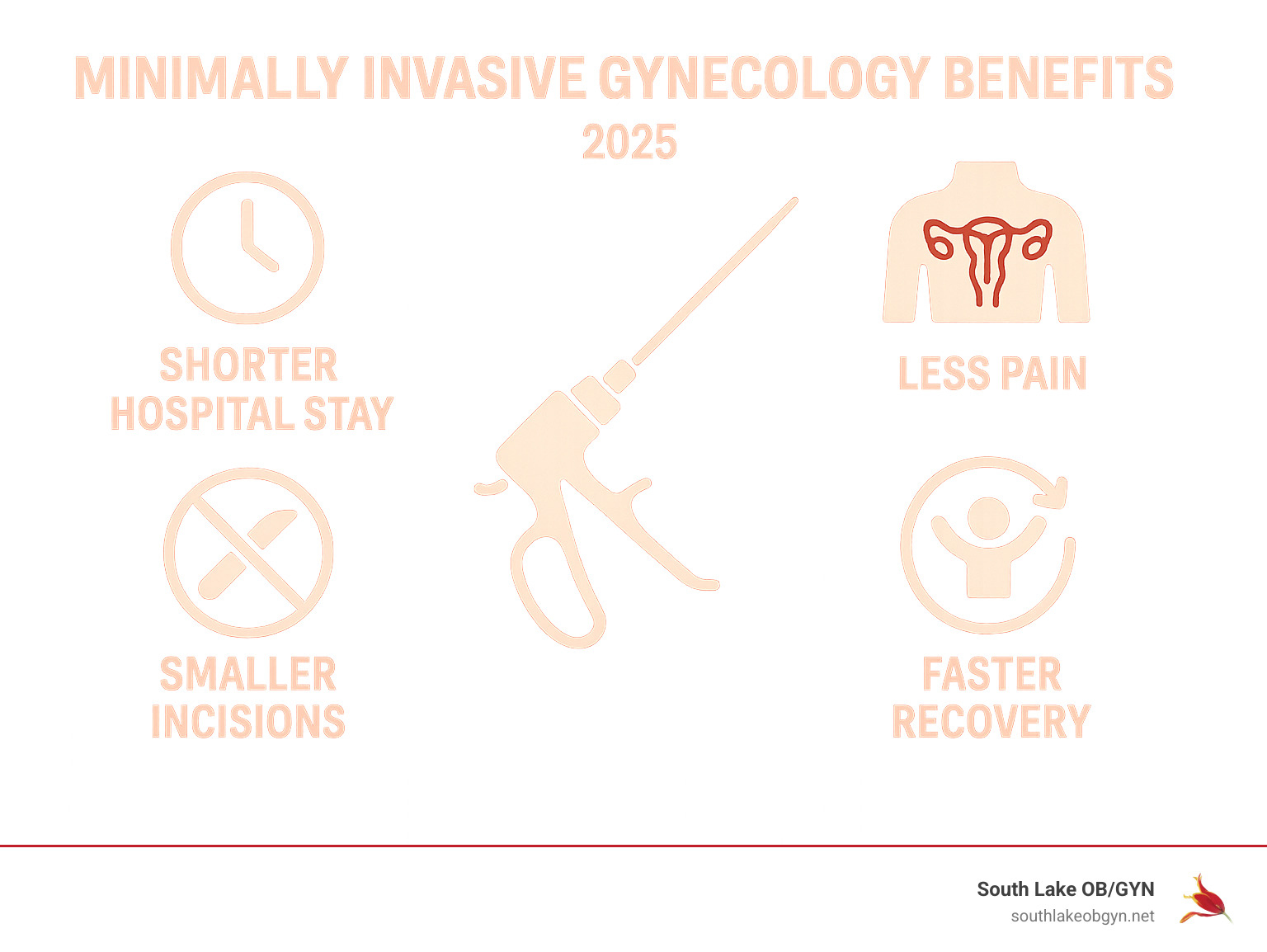
Caption: Minimally invasive gynecology offers significant benefits, which are frequently explored in the journal’s research.
Filename: mig_benefits_infographic.jpg
The journal covers groundbreaking research on conditions like endometriosis, uterine fibroids, and adenomyosis, while showcasing innovative surgical techniques such as hysteroscopy, laparoscopy, and robotic surgery. From learning curve analyses to novel treatment approaches, JMIG provides the evidence-based foundation that shapes modern gynecologic practice.
As Dr. Matthew Casavant, a founding physician with extensive training in advanced minimally invasive surgery and the first certified robotic surgeon at South Lake Hospital, I regularly reference the Journal of Minimally Invasive Gynecology to stay current with the latest surgical innovations and research findings. My decade-plus experience as a pioneer in minimally invasive surgery has shown me how this journal’s publications directly translate into better patient outcomes and more effective treatment options.
Simple guide to journal of minimally invasive gynecology terms:
- advanced & minimally invasive gynecology
- minimally invasive gynecology
- what is minimally invasive gynecology
What is the Journal of Minimally Invasive Gynecology (JMIG)?
The Journal of Minimally Invasive Gynecology (JMIG) represents much more than just another medical publication—it’s the heartbeat of modern women’s surgical care. This prestigious journal has earned its reputation as the go-to resource for anyone passionate about advancing gynecologic surgery through less invasive techniques.

Caption: A recent cover of the Journal of Minimally Invasive Gynecology, showcasing its dedication to cutting-edge research.
Filename: jmig_cover_research.jpg
What makes JMIG truly special is its primary focus on translating research into real-world improvements for patients. Every clinical research study, systematic review, and case series published in its pages serves one ultimate goal: helping women receive better, less invasive care. The journal’s scope covers everything from breakthrough surgical innovations to comprehensive patient outcome studies.
The target audience for JMIG reads like a who’s who of women’s healthcare. Gynecologic surgeons rely on it for the latest techniques, while researchers use it to share groundbreaking findies. Medical fellows and residents turn to its pages to build their knowledge base, and healthcare professionals across the spectrum find valuable insights for their practice.
Key Identifiers and Scope
When you’re searching for the Journal of Minimally Invasive Gynecology in academic databases, you’ll find it listed under ISSN 1553-4650 for print editions and EISSN 1553-4669 for digital access. The journal’s ISO abbreviation, ‘J Minim Invasive Gynecol’, makes it easy to cite and reference in research papers.
What really sets JMIG apart is its role as the official journal of AAGL—the organization dedicated to advancing minimally invasive gynecology worldwide. This partnership means the journal doesn’t just report on advances in women’s health; it actively drives clinical practice, research, innovation, and advocacy efforts.
At South Lake OB/GYN, we understand how crucial this commitment to excellence is for our patients. Our approach mirrors JMIG’s dedication to advancing women’s healthcare through evidence-based practice. You can learn more about our comprehensive gynecological care and how we incorporate these advances into patient care.
Who It’s For and What It Publishes
The beauty of JMIG lies in its ability to speak to such a diverse audience. Practicing gynecologists find the clinical insights they need to improve patient outcomes. Medical students find the foundation they need to understand modern surgical approaches. Healthcare professionals across disciplines gain valuable perspectives on women’s health.
The journal publishes an impressive range of content that keeps readers engaged and informed. Original articles present fresh research findings that can change how we approach patient care. Meta-analyses help make sense of complex research landscapes, while video articles offer something truly unique—the ability to watch surgical techniques unfold step by step.
Expert editorials provide thoughtful commentary on where the field is heading, and letters to the editor create space for important professional discussions. This variety ensures that whether you’re looking to master a new surgical technique or understand the latest research trends, JMIG has something valuable to offer.
The journal’s commitment to showcasing real surgical innovations resonates deeply with our practice philosophy. We believe in embracing these advances to offer our patients the best possible outcomes, truly embodying The Miracle of Minimally Invasive Gynecological Surgery.
The AAGL Connection: A Global Community for Education and Advancement
The Journal of Minimally Invasive Gynecology isn’t just another medical publication sitting on a shelf – it’s the beating heart of something much bigger. As the official journal of AAGL (Advancing Minimally Invasive Gynecology Worldwide), it represents the voice of the largest medical association dedicated to improving women’s healthcare through surgical innovation.
Think of AAGL as a global family of healthcare professionals who share a common mission: making surgery better for women everywhere. This incredible community spans continents, bringing together surgeons, researchers, and educators who are passionate about advancing the field of minimally invasive gynecology.

Caption: Medical professionals networking and collaborating at an AAGL Global Congress, fostering global advancements in MIGS.
Filename: aagl_congress.png
Being part of AAGL means having access to an amazing treasure chest of resources. Members can tap into SurgeryU, which is like having a Netflix for surgical videos – except instead of binge-watching dramas, you’re learning life-changing surgical techniques. There are also webinars that keep you up-to-date with the latest developments, and the Annual Global Congress where the brightest minds in the field come together to share their findies.
The networking opportunities alone are incredible. Imagine being able to connect with surgeons from around the world, sharing experiences, and learning from each other’s successes and challenges. It’s this collaborative spirit that makes the medical community so special and ultimately benefits patients everywhere.
Supporting Education and Surgical Training
What really sets AAGL apart is its deep commitment to education and training. They understand that the future of women’s healthcare depends on having skilled, well-trained surgeons who can perform these delicate procedures with confidence and expertise.
The Fellowship in Minimally Invasive Gynecologic Surgery (FMIGS) is like the gold standard of surgical training. With programs at 60 institutions across the United States and six international locations, it’s designed to create the next generation of surgical experts. These fellows don’t just learn techniques – they dive deep into research, innovation, and the art of providing compassionate care.
For residents who are just starting their journey, there’s the Essentials in Minimally Invasive Gynecologic Surgery (EMIGS) program. This gives them a solid foundation in MIGS techniques right from the beginning of their careers, ensuring they’re well-prepared for the challenges ahead.
This focus on continuous education and skill development creates a beautiful cycle where knowledge from cutting-edge research published in the Journal of Minimally Invasive Gynecology gets passed down to new generations of surgeons. It’s how innovations that start in research labs eventually make their way to operating rooms, where they can truly make a difference in women’s lives.
At South Lake OB/GYN, we’re proud to be part of this tradition of excellence in surgical care. Our commitment to staying current with the latest advances ensures that our patients receive the most effective treatments available. Learn more about our approach to Advanced Minimally Invasive Surgery and how we bring these innovations to Central Florida.
A Look Inside: Key Research Topics and Innovations in JMIG
When you flip through the pages of the Journal of Minimally Invasive Gynecology, you’re looking at the cutting edge of women’s healthcare. This isn’t just academic theory – it’s real research that’s changing how we treat patients every day. Recent publications showcase everything from groundbreaking surgical innovations to detailed studies on patient outcomes, all focused on making procedures safer and more effective.
The beauty of JMIG lies in its practical approach to research. Whether it’s exploring machine learning applications in endometriosis care or presenting results from complex randomized controlled trials, every study has one goal: improving women’s lives through better surgical techniques. We regularly turn to these publications for insights into Robotic Surgery and other advanced approaches that benefit our patients.
Advancing Treatment for Gynecologic Conditions
Some of the most exciting research in JMIG focuses on conditions that affect millions of women worldwide. Take endometriosis, for example. The journal regularly features studies on everything from new diagnostic methods to innovative surgical approaches. The AAGL 2021 Endometriosis Classification, published in JMIG, has become a standard tool for surgeons worldwide. Research consistently explores how laparoscopic surgery and specialized techniques like ureterolysis can dramatically improve outcomes for women dealing with this often debilitating condition. Our commitment to Diagnosing and Treating Endometriosis reflects these evidence-based approaches.
Uterine fibroids represent another major focus area. JMIG frequently showcases innovative myomectomy techniques that preserve fertility while effectively treating symptoms. One particularly interesting case series highlighted vaginal myomectomy using the Dührssen incision for specific types of fibroids. The results were impressive – patients experienced short hospital stays and minimal complications while maintaining their fertility options. This aligns perfectly with our philosophy around Fibroid Removal.
Perhaps one of the most exciting developments involves adenomyosis treatment. A groundbreaking case report in JMIG detailed the first successful use of transcervical ultrasound-guided radiofrequency ablation with the Sonata System for treating this condition. The results were remarkable: a 66.3% decrease in lesion volume and a 40.8% decrease in uterine volume within just six months, plus significant symptom improvement. You can read more about this breakthrough in the Research on transcervical radiofrequency ablation for adenomyosis.
The journal also tackles cesarean scar defects, comparing different surgical approaches to find the safest, most effective treatments. A compelling study compared the traditional 26 Fr resectoscope with the smaller 16 Fr mini-resectoscope for hysteroscopic repair. The mini-resectoscope won hands down – fewer complications (0.7% vs. 5.8%), less fluid absorption, and higher patient satisfaction, all while achieving the same great results.
For ovarian cysts, JMIG explores creative solutions like ultrasound-guided pigtail catheter drainage for large endometriomas. This technique is especially valuable for young women hoping to conceive, as it preserves ovarian function while effectively treating the problem.
Innovations in Surgical Techniques and Technology
The technology section of JMIG reads like a glimpse into the future of surgery. Transvaginal Natural Orifice Surgery (NOTES) represents one of the most exciting frontiers. Research published in the journal shows that gynecologic surgeons need approximately 36 cases to master cystectomy techniques, with the recommendation to start with simpler adnexectomy procedures first. This practical guidance helps surgeons safely adopt these advanced techniques. The detailed Research on the learning curve for transvaginal surgery provides invaluable insights for surgical training.
JMIG has also featured transvaginal NOTES for tubal reanastomosis – a technique that offers fast recovery times and excellent cosmetic outcomes. It’s fascinating how these approaches are expanding what’s possible in minimally invasive surgery.
The journal’s focus on mini-resectoscopes demonstrates how even small improvements in technology can make big differences for patients. These smaller instruments mean less trauma, faster recovery, and better overall experiences.
Radiofrequency ablation continues to show promise beyond adenomyosis treatment. JMIG explores its applications across various gynecologic conditions, consistently demonstrating its potential as a game-changing minimally invasive option.
Of course, the foundational techniques of hysteroscopy and laparoscopy remain central to JMIG’s coverage. The journal continuously reports on refined instruments, improved techniques, and expanded applications for these procedures. Our expertise in Hysteroscopy builds directly on these published advances.
One particularly interesting development involves laser therapy for non-surgical treatment. A 12-month study published in JMIG showed that hybrid fractional laser therapy (combining 1470nm and 2940nm wavelengths) safely and effectively treats Genitourinary Syndrome of Menopause. Patients experienced significant improvements across multiple health measures with zero adverse events – proving that “minimally invasive” can extend beyond surgery to include office-based treatments.
These innovations showcase how the Journal of Minimally Invasive Gynecology serves as more than just a publication – it’s a bridge between cutting-edge research and real-world patient care, constantly pushing us toward safer, more effective treatments for women.
The Evolution and Impact of the Journal of Minimally Invasive Gynecology
The Journal of Minimally Invasive Gynecology has grown alongside the incredible advances in women’s surgical care over the past quarter-century. Since its early days – with the earliest documented volume being Volume 8 in 2001 – JMIG has been there every step of the way, documenting and driving the change of how we approach gynecologic surgery.

Caption: A timeline illustrating the growth in JMIG’s publication frequency over the years, reflecting the expanding field of MIGS.
Filename: jmig_timeline.png
What’s really fascinating is how the journal’s publication frequency tells the story of our field’s explosive growth. Back in 2005, JMIG published just 6 issues per year. As minimally invasive techniques became more sophisticated and research flourished, they expanded to 7 issues annually from 2015 to 2018. Then came the big leap – by 2021, they were publishing an impressive 12 issues per year, often including special supplementary editions.
This isn’t just about numbers on a page. Each additional issue represents countless hours of research, innovation, and dedication to improving women’s lives. It shows how rapidly our understanding of minimally invasive surgery has evolved, and how eager the medical community has been to share these breakthroughs.
The historical impact of JMIG on women’s healthcare has been nothing short of remarkable. Over these 25+ years, the journal has been instrumental in improving patient safety by sharing research that leads to fewer complications and better outcomes. When surgeons worldwide read about a new technique that reduces recovery time from weeks to days, or a procedure that eliminates the need for large incisions, that knowledge directly translates to better care for their patients.
The journal has also played a crucial role in setting clinical standards across the globe. By publishing rigorous research and systematic reviews, JMIG helps establish what works best and what doesn’t. This evidence-based approach means that whether a woman receives care in Florida or Finland, she can expect treatment based on the same high standards of scientific evidence.
Perhaps most importantly, JMIG has fostered a culture of innovation that never stops pushing boundaries. The journal encourages researchers to explore new frontiers – from robotic applications to natural orifice surgery – always with the goal of making procedures less invasive while maintaining or improving their effectiveness. It’s this spirit of continuous improvement that has transformed gynecologic surgery from major operations requiring weeks of recovery to outpatient procedures that get women back to their lives faster than ever before.
Frequently Asked Questions about JMIG
As healthcare professionals and patients alike become more interested in minimally invasive surgical options, we often receive questions about the Journal of Minimally Invasive Gynecology and its role in advancing women’s healthcare. Let me share some of the most common inquiries we encounter.
Who should read the Journal of Minimally Invasive Gynecology?
The Journal of Minimally Invasive Gynecology serves as an essential resource for a diverse community of healthcare professionals committed to advancing women’s surgical care. Gynecologic surgeons rely on it to stay current with the latest surgical techniques, clinical outcomes, and evidence-based practices that directly impact their daily work with patients.
For those still in training, including OB/GYN residents and medical fellows, JMIG offers invaluable educational content. The combination of peer-reviewed research articles and detailed surgical videos provides both foundational knowledge and advanced insights that shape their developing expertise.
Researchers in women’s health find JMIG to be both a platform for sharing their findies and a comprehensive resource for reviewing existing literature. It helps them identify emerging trends and unexplored areas that could benefit from further investigation.
The journal’s reach extends beyond physicians to include any medical professional interested in minimally invasive gynecologic surgery (MIGS). Nurses, physician assistants, and other allied health professionals gain valuable perspectives on patient management, evolving treatment options, and the latest developments that affect their collaborative care approach.
How can I access articles in the Journal of Minimally Invasive Gynecology?
Accessing the wealth of research within JMIG is more straightforward than many people realize. AAGL membership often provides the most comprehensive access, as members typically receive full access to current and archived content as part of their membership benefits.
Many healthcare professionals gain access through institutional subscriptions. Universities, hospitals, and medical institutions frequently maintain subscriptions that allow their affiliated staff, students, and researchers to access the complete journal archive.
For those without institutional access, the ScienceDirect platform hosts JMIG articles and allows you to browse abstracts freely. When you need access to specific research, individual article purchase options are available directly through the publisher’s platform.
Don’t overlook university libraries as a resource. Even if you’re not directly affiliated with an institution, many university libraries offer public access terminals or interlibrary loan services that can help you obtain specific articles you need.
What are the main benefits of following this journal?
Following the Journal of Minimally Invasive Gynecology offers tremendous value for anyone committed to excellence in women’s healthcare. Staying current with cutting-edge research means you’re always aware of the newest findings and innovations that could benefit your patients or improve your understanding of the field.
The journal’s video articles are particularly valuable for learning new surgical techniques. These visual demonstrations provide insights that written descriptions simply cannot match, making complex procedures more accessible and understandable.
Perhaps most importantly, JMIG helps you understand evidence-based best practices. Every treatment decision becomes more confident when it’s supported by rigorous, peer-reviewed research. This scientific foundation ensures that patient care recommendations are based on solid evidence rather than outdated practices.
The journal also serves as your gateway to connecting with a global community of experts through the AAGL. This connection opens doors to networking opportunities, collaborative research projects, and ongoing professional development that can significantly improve your career and patient care capabilities.
At South Lake OB/GYN, we value staying informed about the latest developments in minimally invasive gynecology because it directly translates to better outcomes and experiences for our patients.
Your Trusted Partner in Advanced Gynecological Care
The Journal of Minimally Invasive Gynecology represents more than just academic reading—it’s a guide that guides healthcare professionals toward better patient outcomes and innovative surgical solutions. For over 25 years, this authoritative resource has shaped the landscape of women’s healthcare, empowering gynecologic surgeons and medical professionals worldwide to deliver excellence in every procedure. The journal’s unwavering commitment to rigorous research and comprehensive education creates a ripple effect that directly benefits patients like you.

Caption: Our dedicated team at South Lake OB/GYN, committed to providing compassionate, personalized care.
Filename: southlakeobgyn_team.png
At South Lake OB/GYN in Clermont, FL, we understand that staying informed isn’t just about professional development—it’s about honoring our commitment to you. When we dive into the latest research published in JMIG, we’re not just reading academic papers. We’re finding new ways to make your surgical experience safer, more comfortable, and more effective.
Our practice thrives on open communication, personalized care, and creating a family-like atmosphere where you feel truly heard and understood. This philosophy aligns perfectly with the evidence-based approach championed by the Journal of Minimally Invasive Gynecology. Every breakthrough in minimally invasive techniques, every innovation in surgical technology, and every improvement in patient outcomes that we learn about gets carefully considered for how it might benefit our patients.
The beauty of following premier publications like JMIG lies in how it transforms our daily practice. When we read about new radiofrequency ablation techniques for adenomyosis or learn about improved hysteroscopic instruments that reduce complications, we’re thinking about real faces—our patients who trust us with their care. This dedication to continuous learning ensures we can offer you the most advanced, least invasive options available, always with your comfort and well-being as our top priority.
We believe that exceptional healthcare happens when cutting-edge knowledge meets genuine compassion. That’s why we invite you to experience how our research-informed approach translates into personalized care that feels like family. Learn more about our approach to advanced minimally invasive surgery and find how we’re putting the latest advances to work for you.