


Stop the Clock: How to Keep Wrinkles at Bay
Consistent skincare, including daily moisturizing, is a foundational step in preventing wrinkles.
The Truth About Timeless Skin
How to prevent wrinkles starts with a simple truth: prevention is far easier than reversal. While aging naturally reduces skin’s moisture and elasticity, most wrinkle formation is preventable with the right approach.
Quick Answer: Essential Steps to Prevent Wrinkles
- Daily sun protection – Use SPF 30+ sunscreen every day
- Moisturize consistently – Keep skin hydrated and plump
- Use proven ingredients – Retinoids, Vitamin C, and antioxidants
- Stay hydrated – Drink plenty of water and eat antioxidant-rich foods
- Get quality sleep – 7-9 hours for skin repair and regeneration
- Avoid smoking – Smoking accelerates skin aging dramatically
- Manage stress – High cortisol levels break down collagen
The science is clear: sun exposure accounts for 70 to 90 percent of skin aging, while collagen production declines by approximately 1% annually after our 20s. This means every day you wait to start prevention, your skin loses a little more of its natural defense against wrinkles.
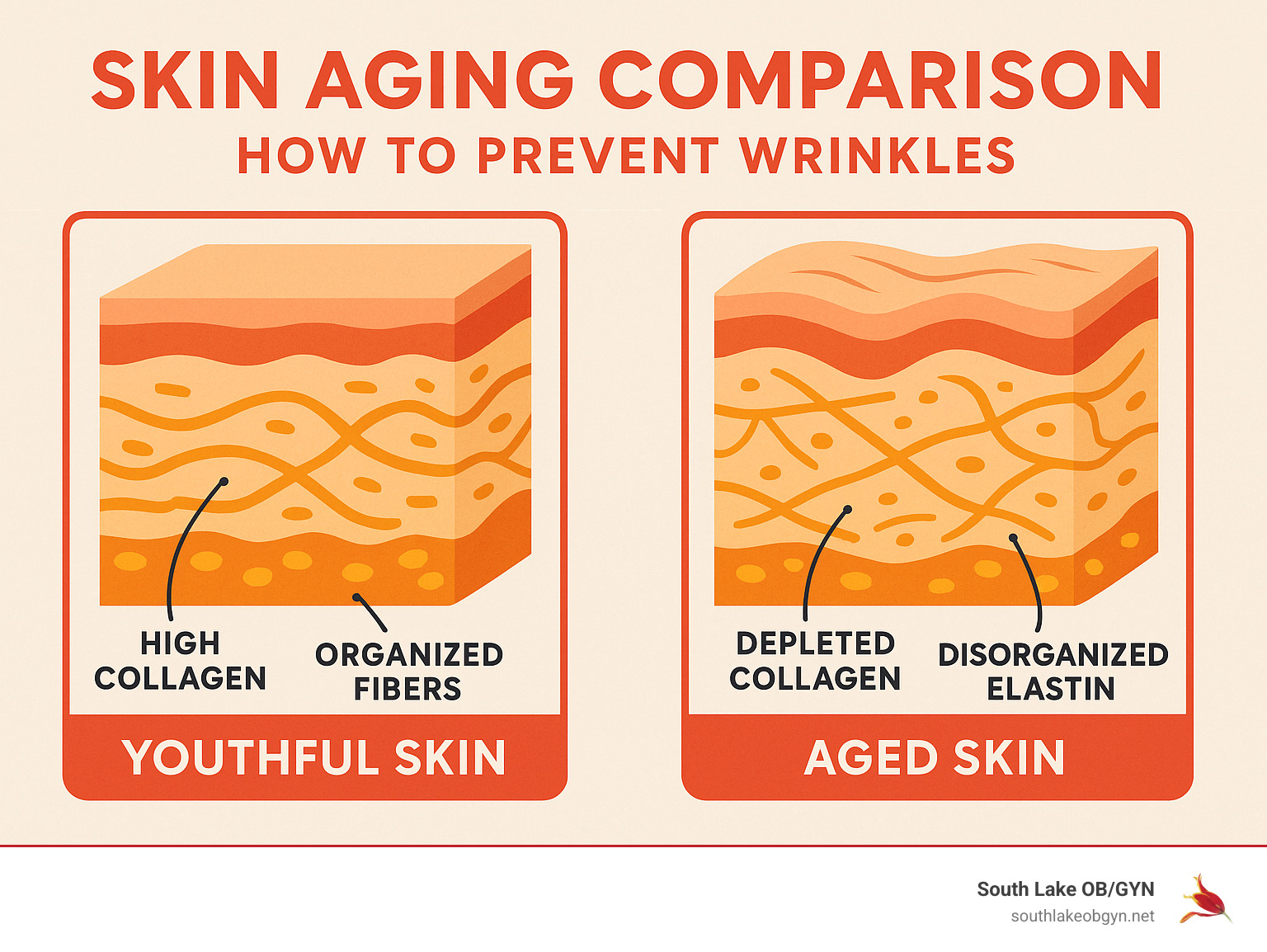
Comparison of youthful skin structure (left) with high collagen and organized fibers versus aged skin (right) showing depleted collagen, disorganized elastin, and visible wrinkles
As Dr. Matthew Casavant, I’ve spent over two decades helping women take a holistic approach to health. I’ve seen how to prevent wrinkles through comprehensive care. My background in preventative medicine confirms that consistency and expert guidance are key to maintaining that youthful glow.
Relevant articles related to how to prevent wrinkles:
Understanding What Causes Wrinkles
Before we dive into how to prevent wrinkles, let’s explore what’s happening beneath your skin. Understanding these causes is your roadmap to prevention.

A split-face image showing one side with significant sun damage (photoaging) and the other side looking healthy and youthful, highlighting the impact of UV exposure on skin aging.
Intrinsic Aging: The Natural Factors
Intrinsic aging is the natural process that’s largely out of your control, but understanding it helps you work with your skin.
Genetics play a key role, determining how early you might see changes. However, you still have significant control over how your skin ages.
Collagen decline is a major factor. Starting in your twenties, your body produces about 1% less collagen each year, reducing the skin’s firmness.
Elastin breakdown occurs alongside collagen loss. Elastin gives skin its ability to bounce back, and as it weakens, skin loses its “snap.”
Slowing cell turnover means old skin cells aren’t replaced as quickly, leading to a duller complexion and more visible fine lines.
Wrinkles come in two types. Dynamic wrinkles appear with muscle contractions (like smiling), while static wrinkles are visible at rest, forming as dynamic lines become permanent due to collagen loss.
Facial expressions create creases that, over time, can become etched into your face.
For a deeper dive into the building blocks of youthful skin, explore The science behind collagen and elastin.
Extrinsic Aging: The Environmental Attack
Extrinsic aging is largely preventable, as these external factors are within your control.
Sun exposure is the primary cause of visible skin aging, responsible for up to 90% of changes. This process, called photoaging, occurs as UV rays damage skin on a cellular level. UVA rays break down collagen deep within the skin, while UVB rays cause sunburn and pigmentation. Both accelerate aging.
Smoking restricts blood flow, depriving skin of oxygen and nutrients. It also reduces collagen production and depletes vitamin D, while the act of pursing your lips creates lines around the mouth.
Pollution generates free radicals that attack skin cells and break down collagen, a constant assault in urban environments.
A poor diet can accelerate aging. A large Dutch study found women who ate more red meat and snacks had more wrinkles than those who ate more fruit. Sugar is especially damaging, causing glycation that harms collagen and elastin.
Dehydration makes wrinkles more visible. Alcohol is particularly dehydrating and inflammatory, creating a perfect storm for premature aging.
The good news? You control these factors. Every healthy choice you make is a step toward younger-looking skin.
Your Daily Defense: A Proactive Skincare Routine
Your daily skincare routine is your personal shield against aging. The key to how to prevent wrinkles is consistency with the right ingredients. It’s never too late to start, but the earlier you begin, the better.
Step 1: Gentle Cleansing
Cleansing removes the day’s buildup of makeup, pollution, and oils. If not removed, these impurities can cause clogged pores and interfere with collagen production. Use gentle cleansers that don’t strip your skin’s protective barrier. After cleansing, patting dry is better than rubbing, as avoiding harsh scrubbing prevents the breakdown of collagen and elastin.
Step 2: Powerful Ingredients to Treat and Repair
This is where you can make a dramatic difference. Certain ingredients are scientifically proven to fight aging.
Retinoids: The gold standard. These vitamin A derivatives boost collagen and speed up cell turnover, smoothing existing lines and preventing new ones. The power of retinoids for skin rejuvenation research confirms their effectiveness.
Vitamin C: A powerful antioxidant that neutralizes free radicals from sun and pollution, brightens your complexion, and boosts collagen.
Hyaluronic Acid: A hydration hero that draws moisture into the skin, plumping up fine lines for a supple, smooth look.
Peptides: These act as messengers, signaling your skin to produce more collagen and elastin, keeping it strong and resilient.
Niacinamide: A form of vitamin B3 that reduces inflammation, improves skin elasticity, and supports overall skin health.
Step 3: Moisturize for Supple Skin
Hydration is essential for preventing wrinkles. A good moisturizer strengthens your skin barrier with ingredients like ceramides and glycerin, keeping irritants out and moisture in. Well-hydrated skin is more resilient and looks plumper, which helps in preventing dryness and temporarily masking fine lines. This plumping effect gives your skin an immediate boost.
Learn more about Why moisturizing is crucial as you age and how needs change over time.
Step 4: The Non-Negotiable—Sun Protection
If you remember one thing about how to prevent wrinkles, let it be this: sunscreen is your most powerful tool. Sun exposure causes up to 90% of visible aging, making daily protection essential. Choose a broad-spectrum sunscreen with SPF 30 or higher and make daily application a non-negotiable habit, even on cloudy days or indoors, as UVA rays penetrate clouds and windows. This protects against the deep sun damage that leads to wrinkles. Reapply every two hours when outdoors and supplement with protective clothing and hats.
For help Finding the best sunscreen for your skin, consult this guide.
The Ultimate Lifestyle Guide on How to Prevent Wrinkles
Your skincare routine is just one part of the equation. How to prevent wrinkles also depends on your daily choices—what you eat, how you sleep, and how you handle stress. Your skin reflects your overall health.

A colorful flat lay of skin-healthy foods like salmon, avocados, berries, and leafy greens, showcasing ingredients vital for skin health.
How to Prevent Wrinkles with Your Diet and Hydration
The foods you choose can either support your skin or accelerate aging. Antioxidant-rich foods like colorful berries, citrus fruits, and leafy greens are packed with vitamin C, which is essential for building collagen. Omega-3 fatty acids found in salmon and walnuts reduce inflammation and strengthen your skin’s barrier. A Dutch study even linked diets high in fruit to fewer wrinkles.
It’s also about what to limit. Excess sugar causes glycation, a process that makes collagen and elastin stiff and brittle. Staying hydrated by drinking plenty of water is also crucial, as it plumps skin cells from the inside out, keeping skin elastic. Research shows that how water intake affects skin can improve its barrier function.
The Impact of Sleep and Stress
Quality sleep is when your skin does its most important repair work. Aim for 7-9 hours a night. During sleep, your body produces human growth hormone (HGH) to keep skin thick and elastic. Lack of sleep boosts cortisol, a stress hormone that breaks down skin cells. Studies show that getting only 5 hours of sleep can lead to twice as many fine lines as getting 7 hours.
Stress management is just as important. Chronic stress lifts cortisol, which accelerates collagen breakdown. Find healthy ways to manage stress, like meditation, yoga, or regular exercise, for healthier, more resilient skin.
Habits to Make or Break for Youthful Skin
Certain habits can make or break your skin’s appearance.
Quitting smoking is the best gift you can give your skin. Nicotine restricts blood flow, starving skin of oxygen, while chemicals in cigarettes reduce collagen.
Avoiding excessive sun exposure is the golden rule. Sun damage accounts for 70-90% of visible aging.
Your sleep position matters. Sleeping on your side or stomach can create “sleep lines.” Try sleeping on your back or using silk pillowcases to reduce friction.
Limiting alcohol is another smart move. Alcohol causes inflammation and dehydration, making lines more noticeable.
Be mindful of facial expressions. Repeated squinting or frowning can create permanent lines. Wear sunglasses to avoid squinting.
When to Consider Professional Help
While at-home care and a healthy lifestyle are foundational for how to prevent wrinkles, professional treatments can offer significant benefits when your routine needs a boost.

A patient consulting with a dermatologist, emphasizing the importance of professional advice for personalized skincare and advanced treatments.
Consulting a Skincare Professional
Because everyone’s skin is unique, personalized advice from a professional can make all the difference. A skincare expert can recommend prescription treatments, like stronger retinoids, that are more effective than over-the-counter options. Regular skin health checks also allow for early intervention on any potential issues.
At South Lake OB/GYN’s medical spa team in Clermont, FL, we understand the connection between skin health and overall wellness. We foster a supportive, family-like atmosphere and can help you develop a customized plan that integrates our expertise in women’s health with specialized skincare.
Advanced Treatments at South Lake OB/GYN
When you’re ready for the next level, our medical spa offers a range of non-surgical, minimally invasive treatments. These physician-supervised skincare services go beyond what topical creams can achieve.
- Facials and Chemical Peels: These improve skin health, boost hydration, and stimulate collagen production by removing damaged outer skin layers.
- Microneedling: By creating tiny micro-injuries, this procedure triggers your body’s healing response, boosting collagen and elastin to improve skin texture.
- Laser Treatments: Lasers can target specific concerns like fine lines and sun damage by encouraging new collagen formation for smoother skin.
- Injectables: Treatments can relax muscles to prevent dynamic wrinkles from becoming permanent, while dermal fillers restore lost volume.
Professional treatments often provide more noticeable and longer-lasting results than nonprescription creams. At South Lake OB/GYN, we prioritize open communication, ensuring you feel comfortable and informed about your choices.
Frequently Asked Questions about Wrinkle Prevention
When it comes to how to prevent wrinkles, we hear a lot of questions from patients at our Clermont office. Here are the most common ones, with straightforward answers.
What’s the difference between fine lines and wrinkles?
Fine lines are shallow creases that often appear with facial expressions and may disappear when your face relaxes. Wrinkles are deeper, permanent lines that remain even at rest. They develop over time as fine lines become etched into the skin due to collagen and elastin loss. Fine lines are much easier to treat, which is why starting early is beneficial.
At what age should I start a wrinkle prevention routine?
Most experts recommend starting in your mid-20s. This is because collagen production starts declining by about 1% per year after age 20. However, it’s never too late to start. The most important step at any age is daily sun protection. Your skin has an amazing ability to repair itself with the right support.
Are expensive anti-aging products more effective?
Not necessarily. A product’s effectiveness depends on its science-backed ingredients (like retinoids or Vitamin C), not its price. Many affordable products are highly effective. However, nonprescription creams often have lower concentrations of active ingredients than prescription treatments, which may lead to less noticeable results. That’s why professional guidance can be so valuable. The bottom line is that consistency matters more than cost. A moderately priced product used daily will always outperform an expensive one that’s used sporadically.
Take Control of Your Skin’s Future
Learning how to prevent wrinkles is about embracing a lifestyle that supports your skin and overall well-being. It’s an investment in your future self.
The power of wrinkle prevention lies in its holistic approach. Your skincare routine, diet, sleep, and stress management all work together. Consistency is your secret weapon. A daily habit like applying SPF 30+ sunscreen does more for your skin long-term than any single expensive treatment.
It’s never too early or too late to start. Every positive step you take contributes to healthier, more resilient skin.
At South Lake OB/GYN, we know that healthy skin is part of your overall wellness journey. Our team in Clermont, FL, is committed to treating the whole person. We believe that feeling confident in your skin is important, and we’re here to support you on that journey.
Explore our medical spa services to create a custom plan for your skin

A vibrant image of a person with glowing, healthy skin, reflecting the positive outcomes of consistent wrinkle prevention and personalized care.
Your skin tells a story. With the right knowledge and support, you can make it a story you’re proud to wear. The journey to understanding how to prevent wrinkles starts with small, consistent choices that lead to remarkable results.