


Why Recognizing Uterine Cancer Symptoms Could Save Your Life
Filename: uterine_cancer_symptoms_header.png
Caption: Understanding the subtle signs of uterine cancer can lead to early detection and better outcomes.
Uterine cancer symptoms are often subtle but shouldn’t be ignored. The most important thing to know is that abnormal vaginal bleeding is the warning sign in about 90% of cases.
The most common uterine cancer symptoms include:
- Abnormal vaginal bleeding, especially after menopause or between periods
- Unusual vaginal discharge that is watery, pink, or foul-smelling
- Pelvic pain or pressure
- Pain during intercourse
- Unexplained weight loss (in later stages)
- Feeling full quickly or persistent bloating
Uterine cancer is the most common gynecological cancer, with an estimated 67,880 new cases expected in 2024. The good news is that when caught early, the 5-year survival rate is nearly 95%.
As uterine cancer survivor Maria Lozano shared, “I was already well into menopause when I started experiencing abnormal vaginal bleeding. My sister told me to see a doctor right away – that advice saved my life.”
The key is understanding that bleeding is never normal after menopause, and any changes in your menstrual cycle deserve attention. While other conditions can cause similar symptoms, only a doctor can determine the cause.
I’m Dr. Matthew Casavant, a board-certified OB/GYN with over 20 years of experience. My goal is to help you recognize uterine cancer symptoms so you can take action when it matters most through early detection and personalized care.
Your Guide to Understanding Uterine Cancer
Understanding the two main parts of your uterus is key to understanding uterine cancer. While “uterine cancer” is a broad term, it refers to two different cancers that can develop in the uterus, also known as the womb.
Endometrial cancer is the most common type, making up about 92% of all uterine cancer cases. This gynecological cancer starts in the endometrium, the inner lining of your uterus that sheds during your monthly period. Fortunately, endometrial cancer often causes noticeable uterine cancer symptoms like abnormal bleeding early on, leading to detection when treatment is most effective.
Uterine sarcoma is much rarer, accounting for less than 10% of uterine cancer cases. This type develops in the myometrium—the thick muscular wall of the uterus. Uterine sarcoma is trickier because it may not cause obvious early symptoms, making it harder to detect and often more aggressive.
The difference in symptoms comes down to uterus anatomy. The endometrium’s monthly cycle of shedding means problems there often cause bleeding. The muscular wall, where sarcoma develops, doesn’t have this regular change. Throughout this guide, we’ll cover both types, but most discussions focus on endometrial cancer due to its higher prevalence.
[INFOGRAPHIC] explaining the difference between endometrial cancer and uterine sarcoma, including key statistics on prevalence.

Filename: infographic_uterine_cancer_types.png
Caption: A visual guide to the two main types of uterine cancer and their prevalence.
The Telltale Signs: A Guide to Uterine Cancer Symptoms
Recognizing uterine cancer symptoms early can make a significant difference. While many conditions can cause similar symptoms, it’s crucial to get any changes checked out promptly. For the most current scientific research on uterine cancer symptoms, we turn to trusted sources like the American Cancer Society.

Filename: female_reproductive_system_anatomy.png
Caption: Understanding the anatomy of the female reproductive system helps in recognizing the source of symptoms.
Early Warning: Common Uterine Cancer Symptoms to Watch For
Abnormal vaginal bleeding is the most common early warning sign, occurring in about 90% of women with endometrial cancer.
Postmenopausal bleeding is a critical sign. Any bleeding after menopause, even light spotting, is not normal and requires immediate medical attention. For premenopausal women, signs include bleeding between periods, unexpected spotting, or periods that become significantly heavier or longer than usual. Bleeding after intercourse is another red flag that shouldn’t be dismissed.
Types of abnormal bleeding to report to your doctor:
- Any bleeding after menopause
- Spotting or bleeding between regular periods
- Periods that are much heavier than your normal flow
- Menstrual cycles lasting longer than seven days
- Any bleeding after sexual activity
- Vaginal bleeding that feels unusual for your body
You can find more info about endometrial cancer symptoms on our website for additional details.
Less Common Uterine Cancer Symptoms You Shouldn’t Ignore
Beyond bleeding, other subtle symptoms are also important. Unusual vaginal discharge is a key symptom to watch for, such as watery, pink, brown, or foul-smelling discharge. More than half of women with endometrial cancer report this.
Other signs include pelvic pressure—a persistent feeling of fullness in your lower abdomen—and pain during intercourse (dyspareunia). New or unusual pain during intimacy should be discussed with your doctor.
When Cancer Progresses: Later-Stage Symptoms
Later-stage symptoms appear as the cancer grows or spreads. These can include persistent pelvic pain that may radiate to the back or legs, a noticeable abdominal mass or lump, and unexplained weight loss. Other signs are persistent bloating, feeling full quickly, and changes in bowel or bladder habits, like difficulty urinating or new constipation. Overwhelming fatigue that doesn’t improve with rest can also be a symptom.
Many of these symptoms can also be caused by other conditions, including a fibroid uterus, which is why a proper medical evaluation is essential.
Endometrial Cancer vs. Uterine Sarcoma: What’s the Difference?
Although they both develop in the uterus and can cause similar uterine cancer symptoms, endometrial cancer and uterine sarcoma are different diseases that start in different parts of the organ.
Endometrial cancer begins in the endometrium (the inner lining), making up about 92% of cases. It often causes early symptoms like abnormal bleeding, leading to earlier detection and more effective treatment.
Uterine sarcoma is rarer (less than 10% of cases) and starts in the myometrium (the muscular wall). It is often harder to detect because it may not cause bleeding until it’s larger. Instead, symptoms might include a feeling of fullness, a noticeable lump, or frequent urination.
| Feature | Endometrial Cancer | Uterine Sarcoma |
|---|---|---|
| Origin | Endometrium (inner lining of the uterus) | Myometrium (muscular wall) or connective tissues of the uterus |
| Prevalence | Most common (approx. 92% of uterine cancers) | Rare (less than 10% of uterine cancers) |
| Key Symptoms | Abnormal vaginal bleeding (most common, often early), unusual discharge, pelvic pain. | Abnormal vaginal bleeding (common), pelvic pain, abdominal mass/lump, frequent urination, feeling of fullness. |
| Growth Pattern | Often slower-growing; typically detected early due to bleeding. | Can be more aggressive; may grow rapidly and spread. |
| Risk Factors | Obesity, age, hormonal imbalances (high estrogen), PCOS, Tamoxifen, Lynch syndrome. | Less clear; may include prior pelvic radiation, certain genetic conditions. |
| Prognosis | Generally good when caught early (high 5-year survival rate for localized disease). | Can be more challenging due to aggressive nature and later detection. |
Both types can cause pelvic pain, but sarcomas tend to be more aggressive. Endometrial cancer is often linked to obesity, age, and hormonal imbalances, while risk factors for sarcoma are less clear. Due to earlier detection, endometrial cancer generally has a better prognosis. You can find More info about Endometrial Cancer Prognosis on our site.
The bottom line is that any unusual pelvic symptoms or bleeding require medical evaluation. We’re here to help you figure out what’s going on and get the right care.
Key Risk Factors for Developing Uterine Cancer
Understanding your risk for uterine cancer is as important as recognizing the symptoms. Having risk factors doesn’t mean you’ll get cancer, but it highlights the need for vigilance.

Filename: healthy_lifestyle_risk_factors.png
Caption: A healthy lifestyle can help mitigate some risk factors for uterine cancer.
- Obesity: This is one of the most significant risk factors. Excess fat tissue produces estrogen, which can overstimulate the uterine lining and increase cancer risk.
- Age: Most cases occur in women over 50 who have gone through menopause, but it’s increasingly seen in younger women.
- Menstrual and Pregnancy History: A longer lifetime exposure to estrogen increases risk. This includes starting periods early, late menopause, or never having been pregnant.
- Polycystic Ovary Syndrome (PCOS): This condition involves hormonal imbalances, including higher estrogen levels and irregular ovulation, which increases risk.
- Hormone Replacement Therapy (HRT): Estrogen-only HRT can increase risk, while combination therapy (estrogen and progestin) is protective.
- Tamoxifen: While effective for breast cancer, this drug can act like estrogen in the uterus. The benefits usually outweigh this risk, but close monitoring is necessary.
- Family History and Genetics: A family history of uterine, colorectal, or ovarian cancer, especially related to Lynch syndrome, significantly increases risk. Inform your doctor of any such history.
- Type 2 Diabetes: This condition also increases risk, likely due to its effects on hormones and cell growth.
The empowering news is that many risk factors are linked to lifestyle. Regular exercise, maintaining a healthy weight, and managing conditions like diabetes can make a difference. Our approach to preventive medical care focuses on these factors while monitoring those we can’t change.
Diagnosis: How Doctors Identify Uterine Cancer
If you have concerning uterine cancer symptoms like abnormal bleeding, please contact us. Early detection is key, and at South Lake OB/GYN, we provide a supportive, comfortable environment in our Clermont office for you to share your concerns.
Your visit will start with a conversation about your symptoms and medical history, followed by a physical and pelvic exam. Based on these initial steps, we may recommend additional testing to get a clearer picture.
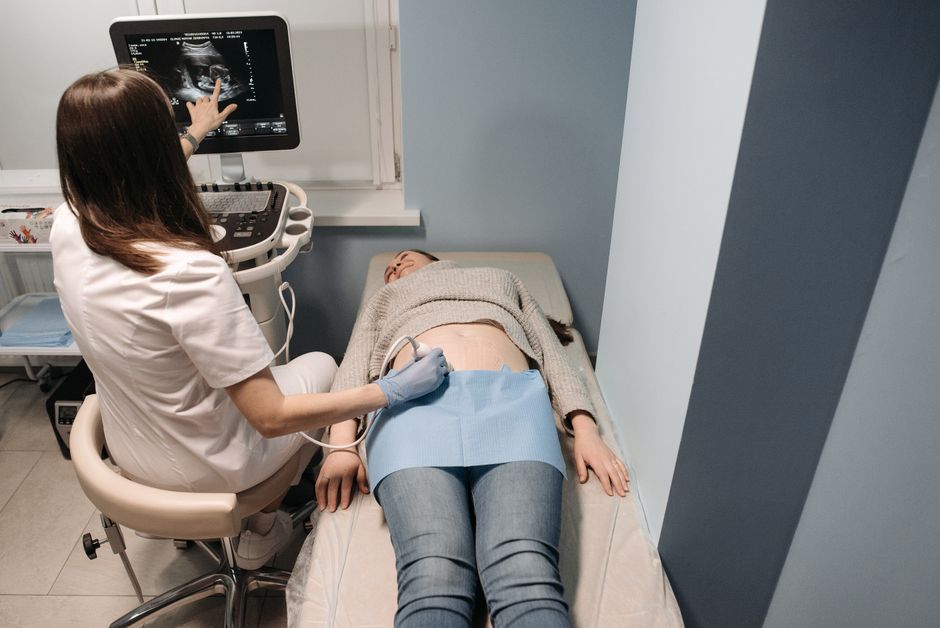
Filename: transvaginal_ultrasound_procedure.png
Caption: A transvaginal ultrasound provides detailed images of the uterus and ovaries.
- Transvaginal Ultrasound: This imaging test is often a first step. It uses a small wand inserted into the vagina to create detailed pictures of your uterus, helping us check the thickness of your endometrial lining and look for any masses.
- Endometrial Biopsy: This is the standard diagnostic test. A thin tube is used to collect a small tissue sample from the uterine lining for lab analysis. The procedure is done in-office and typically causes brief, cramp-like discomfort. You can learn more about What is an Endometrial Biopsy? on our website.
- Hysteroscopy: A thin, lighted camera is inserted through the cervix to view the uterine lining directly. This allows for targeted tissue sampling if any abnormalities are seen. For more details, check out More info about Hysteroscopy.
- Dilation and Curettage (D&C): This is a minor surgical procedure performed under anesthesia if an office biopsy is insufficient. The cervix is gently opened, and tissue is collected from the uterine lining for a thorough examination.
Our goal is to get you answers as efficiently and comfortably as possible. We understand that waiting for results is stressful, and we’re here to support you every step of the way.
Frequently Asked Questions about Uterine Cancer Symptoms
It’s normal to have questions when facing potential uterine cancer symptoms. Here are answers to some common questions we hear in our Clermont office.
Is bleeding after menopause always a sign of uterine cancer?
No, but it always requires immediate medical evaluation. Any bleeding after menopause is a red flag. While about 90% of women with endometrial cancer have abnormal bleeding, other causes include atrophic vaginitis (thinning vaginal tissues), uterine polyps, uterine fibroids, or infections. The cause can only be determined through proper testing by your gynecologist in Clermont FL. Don’t assume it’s “probably nothing”—let us help you find answers.
Can you have uterine cancer without any symptoms?
Yes, it’s possible for uterine cancer symptoms to be subtle or absent in the early stages. Uterine sarcoma, in particular, may not cause early bleeding because it grows in the uterine muscle wall. Symptoms like pelvic pain or a mass may only appear later. This is why your annual gynecological exam is so important. It’s our best opportunity to detect subtle changes and discuss any concerns, even if you feel fine.
What is the survival rate for uterine cancer?
The outlook for uterine cancer is generally good, especially with early detection. Survival rates depend on the cancer type, stage, and response to treatment. According to statistics from the National Cancer Institute, the 5-year relative survival rates are very hopeful:
- Localized (confined to the uterus): 94.8%
- Regional (spread to nearby tissues): 69.7%
- Distant (spread to other parts of the body): 18.9%
The overall 5-year survival rate is 80.8%. These statistics highlight the critical importance of getting uterine cancer symptoms checked out quickly.
Taking the Next Step for Your Health
Learning about uterine cancer symptoms is a proactive and important step for your health. Early detection is life-changing, as it often leads to more effective and less invasive treatment options.
If you experience key symptoms like abnormal vaginal bleeding (especially after menopause), unusual discharge, or persistent pelvic pain, don’t wait. Your body is sending a signal, and we’re here to help interpret it.
At South Lake OB/GYN, we prioritize open communication and personalized care in a family-like atmosphere. We want you to feel comfortable discussing any concern, no matter how small. Our supportive environment in Clermont ensures you feel heard and understood, which is essential for providing the best possible care.
Seeking medical advice when you’re concerned is the most responsible way to take charge of your health. To learn more about our comprehensive approach to women’s health or to schedule an appointment, please reach out to us today. We’re ready to walk alongside you on your health journey.