


Why a Comprehensive Hysterectomy Recovery Checklist Makes All the Difference
Caption: A calm, well-prepared home setup can ease stress and support a smoother hysterectomy recovery.
Filename: hysterectomy-recovery-checklist-header.jpg
A hysterectomy recovery checklist is essential for preparing your body, home, and mind for the healing journey ahead. Whether you’re having an abdominal, vaginal, or laparoscopic hysterectomy, proper preparation can significantly reduce stress and complications during your recovery.
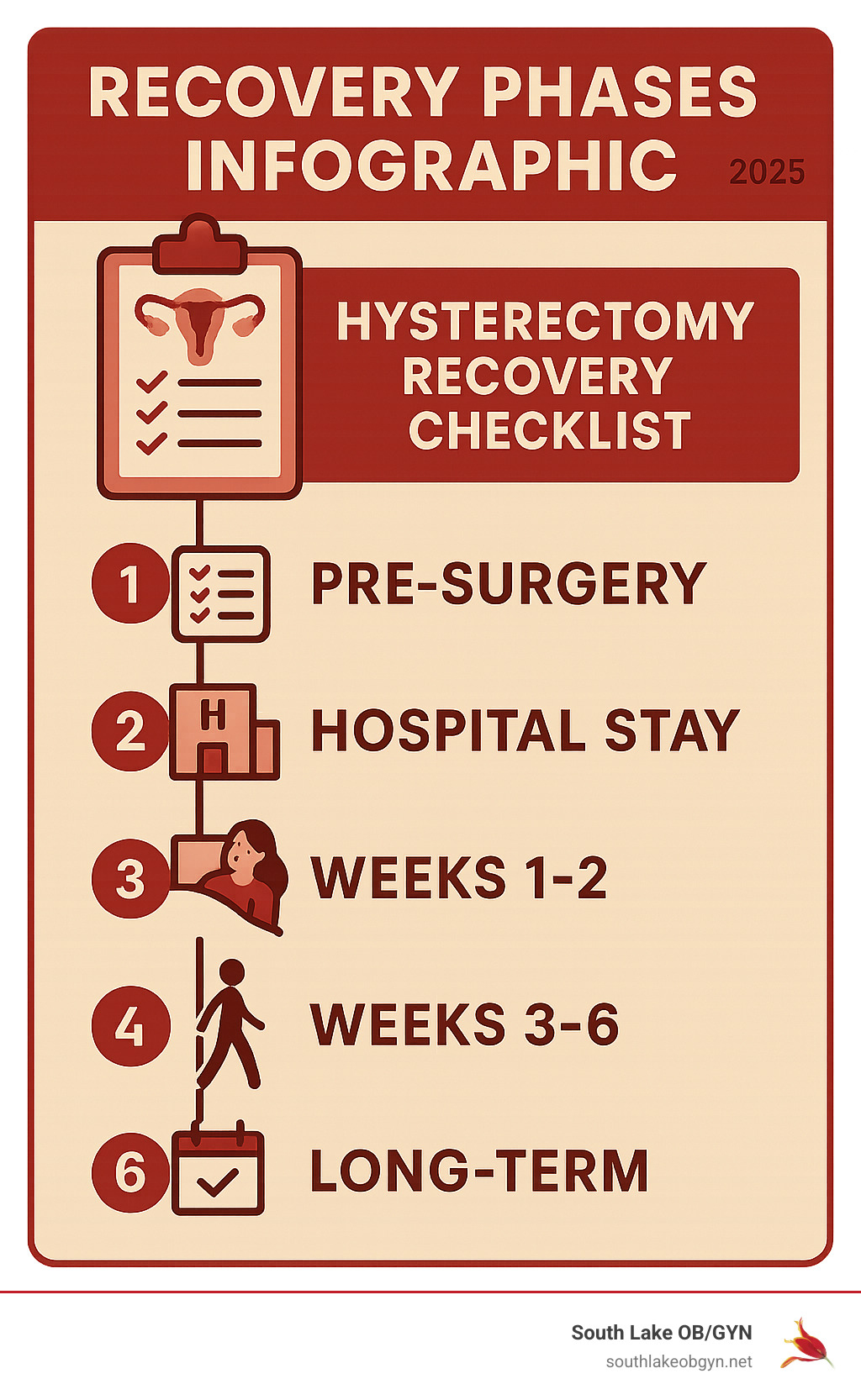
Essential Hysterectomy Recovery Checklist:
- Pre-Surgery: Arrange childcare, stock pantry with easy meals, create recovery station, quit smoking 4+ weeks before
- Hospital Stay: Pack loose pajamas, slip-on shoes, pillow for car ride, sanitary pads, phone charger
- Weeks 1-2: Focus on rest, gentle walking, pain management, no lifting over 10 lbs, shower only (no baths)
- Weeks 3-6: Gradually increase activity, continue lifting restrictions, attend follow-up appointments
- Long-term: Return to work (2-8 weeks), driving (2-3 weeks), exercise (6+ weeks), sexual activity (6+ weeks)
Call your doctor immediately for: fever over 100.4°F, heavy bleeding (soaking a pad per hour), severe pain, signs of infection, or difficulty breathing.
Recovery from hysterectomy typically takes 4-6 weeks, but having a detailed hysterectomy recovery checklist helps ensure you’re prepared for each phase of healing. As Dr. Matthew Casavant, a board-certified OB/GYN with over 20 years of experience in minimally invasive surgery, I’ve helped thousands of women steer their recovery journey using comprehensive preparation strategies. My approach emphasizes that a well-planned hysterectomy recovery checklist is one of the most powerful tools for achieving optimal healing outcomes.
Hysterectomy recovery checklist vocab to learn:
- abdominal hysterectomy recovery
- hysterectomy recovery time in hospital
- recovery from robotic hysterectomy week by week
Before Your Surgery: Setting the Stage for a Smooth Recovery
Understanding Your Procedure and Recovery Timeline
Understanding your specific hysterectomy procedure is the first step in preparing for recovery. The healing path varies depending on the surgical approach, and knowing what to expect can help you feel more confident. For a deeper dive, explore our guide on Types of Hysterectomy.
Here’s a general overview of what to expect:
| Hysterectomy Type | Incision Size | Hospital Stay | Typical Recovery Time (Full) | Return to Most Activities |
|---|---|---|---|---|
| Abdominal Hysterectomy | Larger (traditional) | 2-3 days | 6-8 weeks | 6-8 weeks |
| Vaginal Hysterectomy | No external incision | Same day to 1 day | 2-4 weeks | 2 weeks |
| Laparoscopic Hysterectomy | Small (1cm or less) | Same day to 1 day | 2-4 weeks (often 4-6 weeks) | 2 weeks |
| Robotic Hysterectomy | Small (1cm or less) | Same day to 1 day | 2-4 weeks (often 4-6 weeks) | 2 weeks |
| Laparoscopic Supracervical Hysterectomy (LSH) | Small (1cm or less) | Same day to 1 day | 6 days to 2 weeks | 6 days to 2 weeks |
Minimally invasive approaches like those found on our Minimally Invasive Surgery page often mean a faster initial recovery due to smaller incisions. However, internal healing takes time regardless of the surgical method. We will create a personalized hysterectomy recovery checklist that matches your specific procedure.
Pre-Surgery Hysterectomy Recovery Checklist: Home & Health Prep
A well-planned hysterectomy recovery checklist can make the difference between a stressful recovery and a smooth one. You’re creating a healing sanctuary and getting your body ready for the journey ahead.

Caption: Preparing meals ahead of time removes the stress of cooking during your initial recovery period.
Filename: hysterectomy-recovery-meal-prep.jpg
- Arrange Care: Line up childcare and pet care, as you won’t be able to lift or chase after them.
- Stock & Prep Meals: Fill your pantry and freezer with easy-to-reheat, high-fiber meals to aid digestion and reduce stress.
- Clean Your Home: A thorough house cleaning beforehand is a gift to your future self, as you won’t be able to vacuum or mop for weeks.
- Create a Recovery Station: Set up a comfortable “nest” with everything in arm’s reach: water, medications, phone charger, remote, and entertainment. A grabber tool is invaluable for items you can’t reach.
- Prepare Your Bathroom: A toilet riser can make sitting and standing easier, and a removable shower head helps with bathing.
- Discuss Medications: Talk to your doctor about which medications to stop or adjust, especially blood thinners like fish oil or aspirin.
- Quit Smoking: Stopping smoking at least four weeks before surgery significantly improves healing and reduces complication risks.
- Arrange Transportation: Have a trusted adult ready to drive you home. You cannot drive yourself, and rideshare services are not ideal.
- Hydrate: Drink plenty of water in the days leading up to surgery to help your body prepare.
Following this hysterectomy recovery checklist sets you up for a more comfortable healing experience. For more insights, see our Hysterectomy Recovery Tips.
Packing for the Hospital: Your Comfort & Convenience Kit
Even a brief hospital stay feels better with a few comforts from home. This part of your hysterectomy recovery checklist focuses on packing for comfort and convenience.
Your Hospital Stay Hysterectomy Recovery Checklist
- Comfortable Clothing: Pack loose-fitting pajamas or nightgowns and a cozy robe for walking the halls, which you’ll be encouraged to do to speed up healing.
- Footwear: Bring slip-on slippers or socks with grips to avoid bending over.
- Toiletries: Your own toothbrush, toothpaste, gentle soap, deodorant, and especially lip balm will make you feel more human.
- Tech: Don’t forget your phone and an extra-long charger, as outlets can be hard to reach.
- Abdominal Pillow: A small pillow from home provides gentle support against your abdomen when you cough, move, or for the car ride home.
- Sanitary Pads: Light vaginal bleeding or discharge is normal for a few weeks. No tampons.
- Going-Home Outfit: Choose something loose, stretchy, and easy to put on, like yoga pants and slip-on shoes.
- Essentials: Have your identification and insurance cards ready for admission.
- Entertainment: A book, e-reader, or tablet can help pass the time.
Pack light, but pack smart. For more ideas, the HysterSisters.com Packing List Insights is a helpful resource.
Your Ultimate Hysterectomy Recovery Checklist: The First Weeks at Home
The first few weeks at home are when your hysterectomy recovery checklist becomes your daily guide for healing with confidence.

Caption: Your recovery “nest” should have everything you need within easy reach to minimize strain.
Filename: hysterectomy-recovery-at-home-nest.jpg
Managing Pain, Gas, and Constipation
The first few days at home can be challenging, but some discomfort is normal. With the right approach, you can effectively manage common post-surgery issues.
- Pain Management: Stay ahead of the pain by taking medication as prescribed, before it becomes severe. Many patients successfully stagger over-the-counter medications like acetaminophen (Tylenol) and ibuprofen (Motrin) to maintain consistent relief, ensuring you don’t exceed daily limits. A heating pad on your abdomen can also provide soothing comfort.
- Gas Pain: Gas pain, sometimes felt in the shoulder, is common after laparoscopic surgery. Gentle walking is the best way to move the trapped air, and peppermint tea can also offer relief.
- Constipation: This is a very common side effect of anesthesia and pain medication. Start a stool softener (like Colace) daily while on pain medication. Stay hydrated with 8-10 glasses of water, and eat high-fiber foods. If you haven’t had a bowel movement after a few days, Miralax can provide gentle help. It’s normal not to have a bowel movement for up to a week.
For more details on managing these issues, see our guide on Hysterectomy Side Effects.
Activity, Rest, and Incision Care
Finding the right balance between activity and rest is key. Listen to your body.
- Rest: Fatigue is your body’s signal to rest. Honor it. Naps are medicine during recovery.
- Walking: Daily short walks boost circulation, prevent blood clots, and aid digestion. Gradually increase your distance as you feel stronger.
- Lifting Restrictions: This is non-negotiable. Lift nothing heavier than 10-20 pounds (about a jug of milk) for at least six weeks to avoid tearing internal stitches.
- No Strenuous Chores: Vacuuming, sweeping, and mopping are off-limits for six weeks.
- Incision Care: You can typically shower 24-48 hours after surgery. Let warm water run gently over your incisions and pat them dry. Do not use hydrogen peroxide or ointments unless instructed. Check daily for signs of infection (increased redness, swelling, warmth, pus).
- No Soaking: Avoid baths, hot tubs, or swimming for 2-6 weeks to prevent infection.
- Pelvic Rest: This means nothing in the vagina for 4-8 weeks—no tampons, douching, or intercourse—to allow the vaginal cuff to heal.
The American College of Obstetricians and Gynecologists offers excellent additional guidance.
When to Call Your Doctor: Red Flag Symptoms
While some discomfort is normal, contact us immediately for any of these symptoms. We would rather you call about a minor concern than miss something important.
- Fever of 100.4°F (38°C) or higher.
- Worsening pain not controlled by medication.
- Heavy vaginal bleeding (soaking one pad per hour for two consecutive hours).
- Foul-smelling vaginal discharge.
- Signs of incision infection: increasing redness, swelling, warmth, or pus.
- Bowel issues: inability to pass gas or have a bowel movement for 3-5 days.
- Persistent nausea or vomiting.
- Leg symptoms: pain, redness, or swelling in your calf or thigh, which could indicate a blood clot.
- Call 911 immediately for shortness of breath, difficulty breathing, or chest pain.
Your hysterectomy recovery checklist empowers you, but never hesitate to reach out. At South Lake OB/GYN, open communication is the foundation of successful healing.
The Road Ahead: Long-Term Healing and Life After Hysterectomy
The next phase of your hysterectomy recovery checklist is about gradually returning to your normal routine and embracing life after surgery.

Caption: Gradually returning to activities you love is a key part of your long-term recovery journey.
Filename: life-after-hysterectomy-recovery.jpg
Returning to Normal: Work, Driving, Exercise, and Sex
Every woman’s timeline is different. Listen to your body as you approach each milestone.
- Returning to Work: The timeline depends on your job. Desk jobs may allow a return in 2-3 weeks, while physically demanding jobs often require 4-8 weeks.
- Driving: You can typically drive around 2-3 weeks post-surgery, but only when you can brake hard without pain and are no longer taking narcotic pain medication.
- Exercise: Continue gentle walks, gradually increasing the duration. Around 4-6 weeks, you may be able to add light yoga or swimming. Avoid heavy lifting and intense abdominal workouts for at least six weeks, or until cleared by your doctor.
- Sexual Activity: You must wait 4-8 weeks for pelvic rest to be over. This allows internal stitches to heal completely. Open communication with your partner is key during this time.
Many women find that addressing the issues that led to surgery significantly improves their quality of life. Learn more about the Reasons for Hysterectomy.
Navigating Emotional and Hormonal Changes
Your hysterectomy recovery checklist must also include emotional well-being. It’s normal to experience a range of feelings after surgery.
- Surgical Menopause: If your ovaries were removed, you will enter menopause immediately. Symptoms like hot flashes, night sweats, and mood swings can be sudden. We offer excellent treatments, including hormone replacement therapy, to help.
- Emotional Impact: It’s common to feel a mix of emotions, from relief to a sense of loss. Both are normal. You may also experience temporary “brain fog” or fatigue.
- Support Systems: Lean on your family and friends. Consider talking to a therapist or joining a support group to connect with others who understand.
At South Lake OB/GYN, we support every aspect of your journey. For more information, visit our Hysterectomy Recovery page. Recovery isn’t just about getting back to where you were—it’s about feeling better than you have in years.
Frequently Asked Questions about Hysterectomy Recovery
Having clear information as part of your hysterectomy recovery checklist helps set realistic expectations and eases anxiety. Here are answers to some common questions we hear at South Lake OB/GYN.
How long will I be in pain after a hysterectomy?
Pain varies by surgery type and individual healing. The most acute pain occurs in the first week and is managed with prescribed medication. This typically transitions to a dull ache or soreness that can last for several weeks, especially after an abdominal hysterectomy. While manageable, gradually improving discomfort is normal, you should call us if you experience severe or worsening pain that isn’t controlled by your medication.
What is the fastest way to recover from a hysterectomy?
The “fastest” recovery is a safe and steady one. The key is to be a diligent partner in your own healing.
- Follow your doctor’s orders without exception, especially lifting restrictions.
- Balance rest with gentle movement. Rest gives your body energy to heal, while short daily walks prevent complications.
- Stay hydrated and eat nutritious, fiber-rich foods to give your body the fuel it needs for repair and to combat constipation.
- Listen to your body. Pushing yourself too hard will only set you back.
What are the permanent restrictions after a hysterectomy?
This is great news: for most women, there are no permanent restrictions after a hysterectomy. Once you are fully healed (typically 6-8 weeks for initial recovery), you should be able to return to all your previous activities, including exercise and lifting. Some doctors may advise long-term caution with very heavy lifting to protect your pelvic floor, but this is general advice for all women, not a strict post-hysterectomy rule. We will guide you through this process at your follow-up appointments.
Your Partner in Health and Recovery
This comprehensive hysterectomy recovery checklist is designed to empower you. Preparation is key to a smoother healing journey, regardless of your procedure type.
At South Lake OB/GYN in Clermont, FL, we see how a thorough hysterectomy recovery checklist helps patients experience better recoveries. Our approach is built on open communication and personalized care because every woman’s experience is unique.
Recovery is a process, not a race. There will be good days and days when you need more rest. Be kind to yourself and celebrate small victories.
We foster a family-like atmosphere where you can feel comfortable asking questions. Whether it’s a concern about a symptom or just needing reassurance, we are here to listen and guide you. Your well-being is our priority, and supporting you through recovery is what we do best.