


What You Need to Know About Pregnancy Leg Cramps
Caption: Waking up with a sharp pregnancy leg cramp can be a jarring experience, but relief and prevention are often within reach.
Filename: pregnancylegcrampnight.png_
Pregnancy leg cramps are sudden, painful muscle contractions that typically affect your calf, foot, or thigh, most commonly occurring at night during your second and third trimesters.
Quick Relief & Prevention Guide:
- Immediate Relief: Straighten your leg, flex your foot toward your shin, massage the muscle, or apply heat/cold
- Prevention: Drink 8-12 cups of water daily, stretch your calves before bed, stay active, and eat foods rich in calcium, magnesium, and potassium
- When to Worry: Call your doctor if you experience constant pain, leg swelling, redness, or warmth (possible signs of blood clot)
- How Common: Up to half of pregnant women experience leg cramps, especially in the third trimester
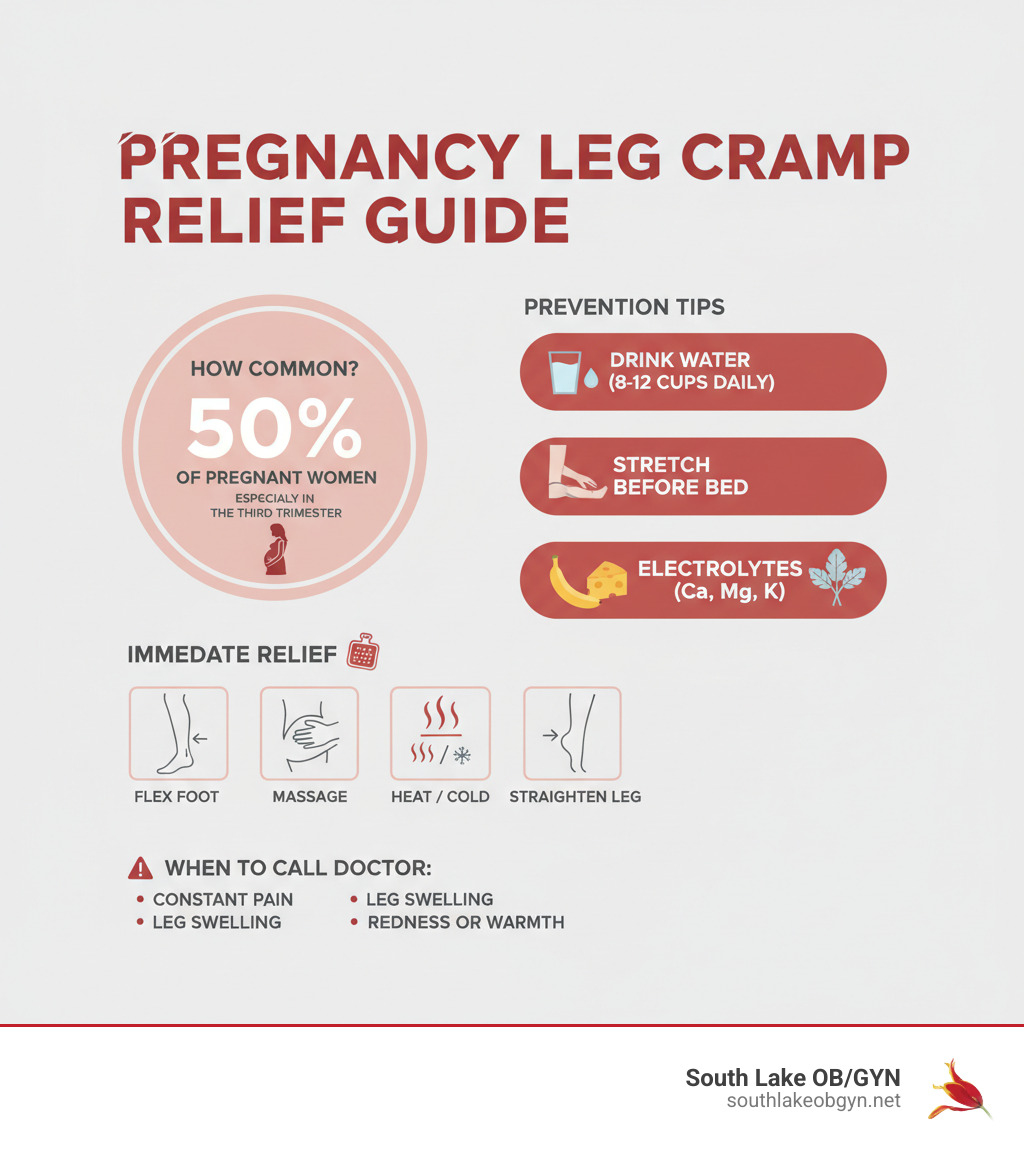
Caption: Understanding the statistics and top tips for pregnancy leg cramp relief.
Filename: pregnancycrampinfographic.png
If you’ve been jolted awake by a sharp, stabbing pain in your calf, you’re not alone. These involuntary muscle spasms—often called “charley horses”—affect up to 50% of pregnant women, particularly as pregnancy progresses. While the exact cause isn’t fully understood, there are proven ways to find relief and reduce how often they occur.
Though these cramps typically last only seconds to minutes, they can leave your muscles sore and disrupt your sleep. Understanding why these cramps happen during pregnancy—from your body’s changing circulation to shifts in your mineral balance—can help you take control of this common discomfort.
I’m Dr. Matthew Casavant, a board-certified OB/GYN and founding physician of South Lake OB/GYN. With over 20 years in practice, I’ve helped countless expectant mothers manage pregnancy leg cramps with preventive strategies and immediate relief techniques. Let me walk you through what you need to know to ease this painful symptom and get back to restful nights.
Why Do Pregnancy Leg Cramps Happen?
While researchers haven’t pinpointed one single cause for pregnancy leg cramps, we understand several contributing factors. Your body is doing incredible work growing a human, and sometimes that means a few systems get a little overwhelmed.

Caption: A growing uterus can exert pressure on nerves and blood vessels, contributing to pregnancy leg cramps.
Filename: uteruspressurediagram.png
The Role of Your Changing Body
Your body’s change during pregnancy can lead to uncomfortable side effects like leg cramps.
First, there’s pregnancy weight gain. This healthy and necessary weight from your baby, placenta, and increased blood volume means your leg muscles are carrying extra pounds. This creates muscle fatigue, especially after a long day, making your muscles more prone to cramping.
Your expanding uterus also plays a major role. As your baby grows, the uterus puts pressure on nerves and blood vessels that travel to your legs. This nerve compression can interfere with normal signals between your brain and leg muscles, potentially triggering spasms.
At the same time, blood vessel compression slows circulation. Your blood volume increases by about 50 percent, but your growing uterus can press on the major veins returning blood from your legs to your heart. This leads to slower circulation in your lower body, which can irritate muscles and make them more likely to cramp.
Dehydration and Nutritional Factors
What you eat and drink plays a surprisingly big role in preventing pregnancy leg cramps.
Dehydration is a common culprit. When your body lacks fluid, muscles become more irritable and your electrolyte balance—essential minerals like sodium, potassium, and magnesium that help muscles function—is thrown off.
Speaking of minerals, low magnesium levels are frequently linked to leg cramps, as magnesium helps muscles relax after contracting. Similarly, low calcium levels can contribute to the problem, as your body may pull calcium from your own stores for your baby’s developing bones, affecting your muscle function.
Low potassium levels can also play a role. Sometimes, it’s an imbalance that matters. For example, high phosphorus intake relative to calcium—often from processed foods and sodas—can contribute to cramping. Fortunately, many of these nutritional factors are within your control.
Immediate Relief: How to Stop a Leg Cramp Now
When a pregnancy leg cramp strikes, you want the pain to stop fast. There are several tried-and-true techniques that can bring relief within minutes.

Caption: Flexing your foot towards your shin is a simple yet effective way to stretch out a sudden pregnancy leg cramp.
Filename: pregnantwomanstretchingfoot.png_
Stretch It Out
Your fastest line of defense is a good stretch. The moment you feel the muscle tighten, take action with active stretching.
If the cramp is in your calf, immediately straighten your leg and gently pull your toes upward toward your shin. This motion of flexing your foot lengthens the contracted muscle and can release the spasm quickly. You can also try a heel-first stretch by pushing your heel forward and then bringing your toes back. Even wiggling your toes can sometimes interrupt the cramping signal.
Once the worst of the pain has passed, try to stand up and gently walk it off for a few minutes. This movement helps restore blood flow to the area and allows the muscle to fully relax.
Apply Pressure and Temperature
If stretching alone isn’t enough, these techniques can provide extra comfort.
A gentle massage can work wonders. Firmly but carefully rub the cramped muscle to increase blood flow and signal the muscle to release.
Heat therapy is often very soothing. A warm bath (not too hot) or a warm shower directed at the leg can relax tense muscles. For an extra boost, try an Epsom salt soak, as the magnesium in the salts may help with muscle relaxation. A heating pad or warm water bottle can also provide targeted relief for lingering soreness.
Interestingly, some women prefer a cold compress. An ice pack wrapped in a towel can numb the area and reduce inflammation. Some find that simply standing on a cold floor provides instant relief. Don’t be afraid to experiment to find what works best for you.
Your Proactive Guide to Preventing Pregnancy Leg Cramps
While knowing how to stop a cramp is great, preventing it in the first place is an even better strategy. A little preparation goes a long way in reducing the frequency and severity of pregnancy leg cramps.

Caption: Staying well-hydrated is one of the simplest yet most effective ways to prevent pregnancy leg cramps.
Filename: pregnantwomandrinkingwater.png_
The Importance of Staying Hydrated
Drinking enough water is one of your most powerful tools against cramps. Your fluid needs are higher during pregnancy, and dehydration can throw off your electrolyte balance, making muscles more prone to spasms.
Aim for 8-12 cups of water per day%20of%20water%20every%20day.) (64 to 96 ounces). Keep a water bottle with you and sip consistently. A quick check of your urine color can help; clear or light yellow means you’re well-hydrated. You can also get hydration from water-rich foods like watermelon, spinach, and carrots.
Essential Stretches and Exercises for pregnancy leg cramps
Keeping your muscles moving and flexible can make a world of difference. Regular, moderate activity like a daily walk improves circulation. Always check with your provider about what level of activity is right for you.
A simple bedtime stretching routine is a great preventative habit. Before bed, stretch your calves by standing about three feet from a wall, placing your palms on it, and leaning forward while keeping your heels on the floor. Hold for 10 seconds, relax, and repeat three times.
If you sit for long periods, take breaks to rotate your ankles and pump your feet. These small movements keep blood flowing. Also, choose comfortable, supportive shoes over high heels, which can shorten calf muscles and make them more vulnerable to cramping. Many patients find relief by wearing compression socks during the day to improve circulation and reduce swelling.
Eating to Beat Cramps: Key Vitamins and Minerals
Your diet is just as important as movement for preventing pregnancy leg cramps. Your muscles need specific nutrients, and pregnancy increases your demand for them.
Continue taking your prenatal vitamins daily. Also, focus on the three mineral superstars for preventing cramps: magnesium, calcium, and potassium.
- Magnesium-rich foods: Leafy greens (spinach, kale), nuts (almonds), seeds, whole grains, and avocados.
- Calcium-rich foods: Dairy products, fortified plant milks, leafy greens, and salmon. Aim for 1,000 mg per day.
- Potassium-rich foods: Bananas, oranges, avocados, spinach, and potatoes.
While many sources recommend magnesium supplements, the scientific research on magnesium for cramps shows mixed results. A Cochrane review found the evidence isn’t consistently strong, and supplements can cause side effects like nausea and diarrhea.
This is why you should always consult your doctor before adding any new supplements. At South Lake OB/GYN, we can evaluate your specific situation, check for deficiencies, and provide personalized, safe guidance for you and your baby.
When Leg Pain Is More Than Just a Cramp
Most pregnancy leg cramps are just an annoying part of the journey. However, it’s important to know when leg pain might signal something more serious so you can protect yourself and your baby.
Distinguishing Cramps from Deep Vein Thrombosis (DVT)
Pregnancy naturally increases your risk of blood clots. In fact, pregnant individuals are about 50 percent more likely to experience them. This makes it crucial to recognize the difference between a typical leg cramp and deep vein thrombosis (DVT)—a blood clot in a deep vein, usually in the leg.
A typical leg cramp is sudden, intense, and resolves within minutes, though it may leave some soreness. The muscle feels hard during the cramp, but there are no other visual changes to the leg.
DVT pain is different. It’s often a persistent, throbbing, or aching pain that doesn’t go away. Critically, DVT comes with other signs. You might notice swelling in one leg, redness or discoloration, or an area that feels warm to the touch. The pain is constant and doesn’t respond to typical cramp-relief techniques.
| Symptom Category | Leg Cramp (Typical) | Deep Vein Thrombosis (DVT – Seek Medical Attention) |
|---|---|---|
| Onset | Sudden, often at rest or during sleep | Can be gradual or sudden |
| Duration | Seconds to minutes; muscle soreness afterward | Persistent, ongoing pain that doesn’t subside |
| Pain Type | Sharp, intense, involuntary muscle contraction | Aching, throbbing, tenderness, or severe pain |
| Accompanying Signs | Muscle feels hard during cramp, no other changes | Swelling (often in one leg), redness/discoloration, warmth to the touch, enlarged veins |
If you experience pain that doesn’t go away, or if your leg is red, warm, or swollen, see your doctor immediately. DVT requires prompt medical attention.
When to Call Your Doctor About Your pregnancy leg cramps
While most pregnancy leg cramps respond to home remedies, certain symptoms warrant a call to our office. You are never bothering us with your concerns—that’s what we’re here for.
Severe or constant pain is a red flag. If the pain is unbearable or lasts for a prolonged period, that’s not typical. Similarly, if you have pain that doesn’t go away, even if it’s not excruciating, we need to know.
Pay attention to your leg’s appearance. Swelling in one leg, any redness or discoloration, or a spot that feels unusually warmth in one area all require evaluation.
Any symptoms that make you suspect a blood clot deserve immediate attention. At South Lake OB/GYN, we’ve built our practice on open communication and creating a family-like atmosphere where you feel comfortable reaching out. If something doesn’t feel right, trust your instincts and give us a call. It’s always better to err on the side of caution.
Frequently Asked Questions about Pregnancy Leg Cramps
Here are answers to some of the most common questions we hear about pregnancy leg cramps in our practice.
Why are leg cramps worse at night?
It’s common for pregnancy leg cramps to strike at night for several reasons. By the end of the day, muscle fatigue makes your legs more susceptible to spasms. When you lie down, your circulation naturally slows, and blood can pool in your legs, irritating muscles. Researchers also believe that involuntary nerve discharges during sleep can cause muscles to contract unexpectedly.
Your body position during sleep also matters. Pointing your toes can shorten your calf muscles, making them more likely to cramp. Try to keep your feet in a neutral position. Sleeping on your left side can also improve overall circulation, which may help.
Can I take supplements for leg cramps?
Many patients ask about taking magnesium supplements or calcium supplements for their pregnancy leg cramps. The most important advice is to consult your doctor first. During pregnancy, the importance of correct dosage cannot be overstated, as too much of any supplement can be harmful.
Regarding magnesium, the research evidence on magnesium for cramps shows mixed results. Some people find relief, while others don’t, and supplements can cause side effects like nausea or diarrhea. While adequate calcium intake is vital, there isn’t strong evidence that supplements prevent cramps more effectively than getting calcium from food.
The bottom line is to talk to us. We can evaluate your specific needs, check for deficiencies, and recommend a safe, personalized approach.
Do leg cramps affect my baby?
This is a common concern, but the answer is reassuring. Typical pregnancy leg cramps are a source of maternal discomfort only—they do not directly harm your baby. Your little one is safely cushioned in your womb, unaware of the cramping.
The cramps themselves don’t affect your baby’s development or well-being. However, it’s important to distinguish cramps from more serious conditions like DVT, which is a risk to the mother’s health. This is why knowing the warning signs is so important. Prioritizing maternal well-being ensures you stay healthy to care for your growing baby.
So, while cramps are miserable for you, rest assured your baby is fine. Focus on relief and prevention, and don’t hesitate to call us with any concerns.
Conclusion
Pregnancy leg cramps are common and frustrating, but you have real options for both relief and prevention. Understanding what’s happening in your body is the first step to taking control.
The key to managing pregnancy leg cramps is a multi-faceted approach. Staying hydrated, stretching daily, remaining active, and eating a nutrient-rich diet can all make a meaningful difference. When a cramp does strike, you know the immediate steps to take: straighten your leg, flex your foot, and breathe through it.
It’s just as important to recognize the warning signs of something more serious. Persistent pain, swelling, redness, or warmth could signal a blood clot and require an immediate call to your doctor. Your health is paramount for both you and your baby.
At South Lake OB/GYN in Clermont, FL, we know that expectant parents feel better with a care team that listens and provides personalized guidance. We’ve built a family-like atmosphere where you can feel comfortable reaching out with any question or concern. Don’t let pregnancy leg cramps rob you of your rest. Learn more about our comprehensive obstetric care and find out how we can support you through every step of your pregnancy journey.