


Understanding Low Belly Pain During the First Trimester
Low belly pain when pregnant in the first trimester is a common experience. While it’s natural to feel concerned, most types of discomfort during early pregnancy are perfectly normal and harmless. Here’s a quick summary:
- Common causes include: hormonal changes, stretching muscles, and digestive issues like gas or constipation.
- Symptoms often feel like: period-like cramps, dull aches, or sharp pains.
- When to be concerned: severe pain, persistent cramping, or accompanied by fever or unusual discharge.
Rest assured, most of the time, these sensations are just your body adjusting to the changes of pregnancy. Keep reading for more details.
I’m Dr. Matthew Casavant, and I’ve dedicated my career to helping women navigate the challenges and joys of pregnancy. My experience with low belly pain during the first trimester comes from years of treating expecting mothers and staying updated with the latest medical advancements.
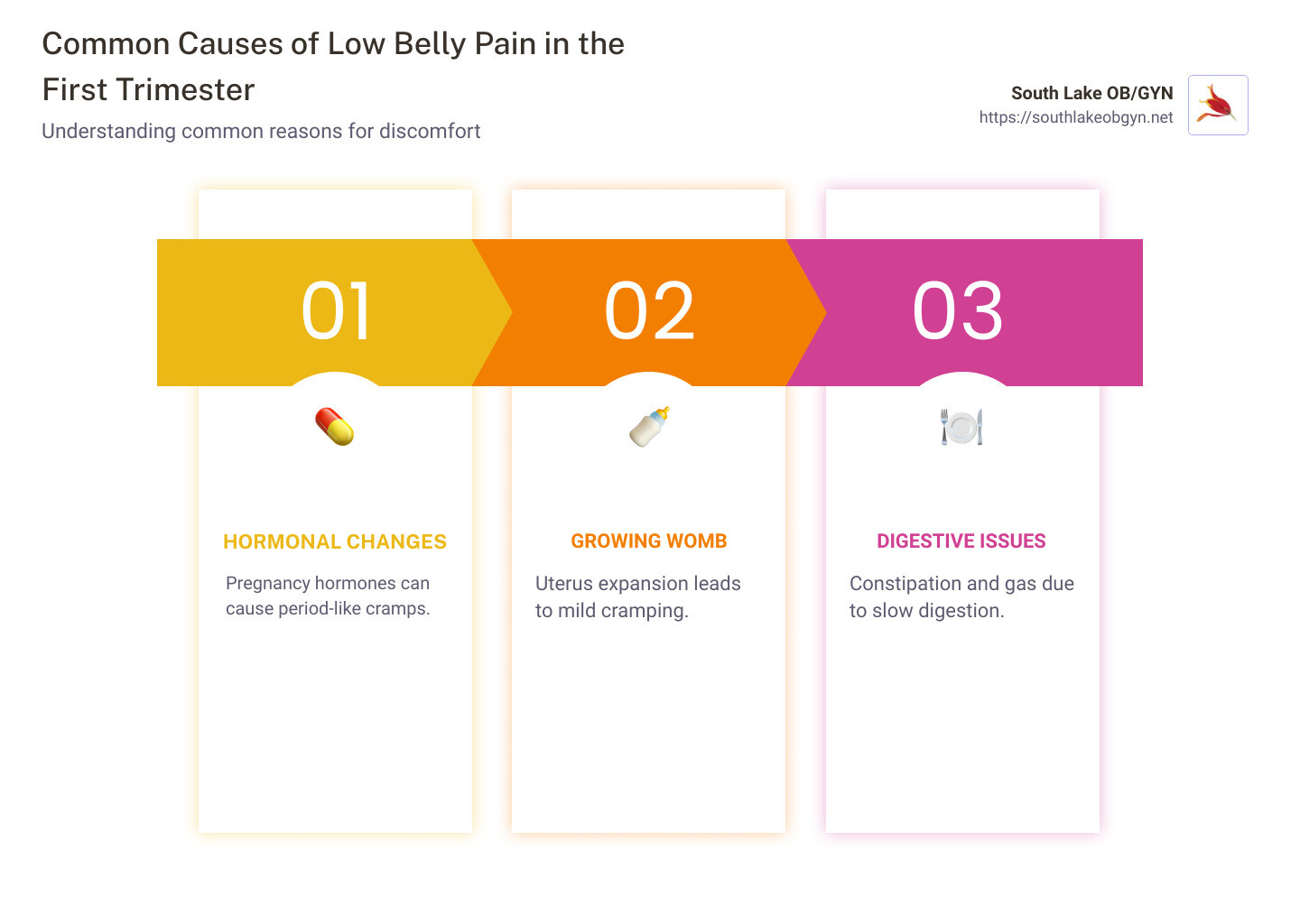
Common Causes of Low Belly Pain in the First Trimester
During the first trimester, experiencing low belly pain can be concerning, but it’s often a normal part of pregnancy. Here are some common causes:
Hormonal Changes
As your body gears up to support your growing baby, hormone levels skyrocket. This can lead to period-like cramps in your lower belly. These cramps are usually mild and come and go.
Fun Fact: Hormones like progesterone help to relax your muscles, which can cause your digestive system to slow down and lead to other types of discomfort.
Growing Womb
Your uterus is expanding to make room for your baby. This can cause mild cramps and a feeling of pressure in your lower belly. It’s a sign that your body is making space for the new life growing inside you.
Example: Imagine blowing up a balloon. Just like the balloon stretches, your uterus is expanding, which can cause some discomfort.
Ligament Pain
One common type of pain is round ligament pain. The round ligament connects your uterus to your groin. As your belly grows, this ligament stretches, sometimes causing sharp cramps on one or both sides of your lower belly.

Quick Tip: To ease this pain, try moving slowly and avoid sudden movements. A warm bath or a heating pad can also help.
Constipation and Trapped Wind
Constipation and trapped wind are frequent complaints in the first trimester. Your digestive system slows down due to hormonal changes, and your growing uterus puts pressure on your intestines.
Symptoms include:
– Bloating
– Gas
– Abdominal cramps
Pro Tip: Drink plenty of water, eat high-fiber foods, and try to stay active to keep things moving.
By understanding these common causes, you can better manage your symptoms and feel more at ease. If you experience severe or persistent pain, it’s important to seek medical advice.
When to Seek Medical Help
Severe or Persistent Pain
If you experience severe or persistent pain, it’s time to contact your GP, midwife, or maternity unit. Severe pain that doesn’t go away can be a sign of a serious condition.
One-sided pain or pain accompanied by dizziness and weakness can indicate an ectopic pregnancy or appendicitis. Both require immediate medical attention.
Bleeding or Unusual Discharge
Any bleeding from your vagina during the first trimester could be a sign of a miscarriage or an ectopic pregnancy.
Unusual discharge—especially if it’s smelly, green, brown, or yellow—can signal an infection. If you notice any of these symptoms, contact your healthcare provider right away.
Fever
A fever (a temperature of 38 degrees Celsius or higher) during pregnancy can be a sign of an infection. Infections can be harmful to both you and your baby, so it’s crucial to seek medical advice if you have a high temperature.
Pro Tip: Don’t hesitate to call your healthcare provider if something just doesn’t feel right. Trust your instincts.
Serious Conditions to Watch For
Ectopic Pregnancy
An ectopic pregnancy occurs when a fertilized egg implants outside the uterus, often in the fallopian tube. This condition is a medical emergency because it can cause internal bleeding. Symptoms include one-sided pain, dizziness, and weakness. If you suspect an ectopic pregnancy, seek immediate medical attention.
Miscarriage
A miscarriage is the loss of a pregnancy before 20 weeks. Signs include cramping, bleeding, and passing tissue. A threatened miscarriage means you have symptoms of a miscarriage but the pregnancy is still viable. If you experience any of these symptoms, contact your healthcare provider right away.
Urinary Tract Infection (UTI)
A UTI can cause painful urination, cloudy urine, and even back pain. If untreated, it can lead to kidney infections or preterm labor. UTIs are common and usually treated with antibiotics safe for pregnancy. Always consult your doctor if you suspect a UTI.
Pre-eclampsia
Pre-eclampsia is a serious condition characterized by high blood pressure and often rib pain. It can develop after 20 weeks of pregnancy and requires close monitoring. Symptoms include severe headaches, visual disturbances, and sudden swelling. Immediate medical attention is crucial to manage this condition.
Placental Abruption
Placental abruption is when the placenta detaches from the uterus wall before delivery. This can cause constant pain and heavy bleeding, posing risks to both mother and baby. It is an emergency and requires immediate medical intervention to ensure the safety of both.
Home Remedies and Management
Managing low belly pain when pregnant first trimester can be challenging, but there are several home remedies and techniques that can help ease discomfort. Here’s how you can manage it:
Rest and Hydration
Rest and hydration are crucial for managing low belly pain during pregnancy. Resting helps reduce strain on your body, while staying hydrated keeps your digestive system functioning smoothly.
- Rest: Take breaks throughout the day. Lie down on your side to alleviate pressure on your lower belly.
- Hydration: Drink plenty of fluids. Aim for at least eight glasses of water a day. Staying hydrated can help prevent constipation, which can cause belly pain.
- Small meals: Eat small, frequent meals to keep your digestive system active and avoid bloating.
Heat Pad and Cold Compress
Using a heat pad or cold compress can provide significant relief from pain and discomfort.
- Heat pad: Apply a warm (not hot) heating pad to your lower belly for 15-20 minutes. This can help relax muscles and ease cramps.
- Cold compress: Alternatively, use a cold compress or an ice pack wrapped in a towel. Apply it to your lower belly for 15-20 minutes to reduce inflammation and numb pain.
Massage and Relaxation Techniques
Gentle massage and relaxation techniques can also be effective in managing low belly pain.
- Belly massage: Gently massage your lower belly in a circular motion. This can help relieve tension and improve blood flow.
- Relaxation techniques: Try deep breathing exercises, prenatal yoga, or meditation to relax your body and mind. These techniques can help reduce stress and alleviate pain.
- Exercise: Light exercises, such as walking or prenatal yoga, can help keep your body active and reduce discomfort.
By incorporating these home remedies and management techniques, you can help alleviate low belly pain when pregnant first trimester and ensure a more comfortable pregnancy.
Next, let’s address some common questions about managing low belly pain during pregnancy.
Frequently Asked Questions about Low Belly Pain When Pregnant First Trimester
What are the common causes of low belly pain in the first trimester?
Low belly pain in the first trimester is pretty common and usually harmless. Here are some of the most frequent causes:
- Hormonal Changes: Your body is adjusting to new pregnancy hormones, which can cause period-like cramps.
- Growing Womb: As your uterus expands to accommodate your baby, you might feel mild cramps.
- Ligament Pain: The round ligament, which supports your uterus, can stretch and cause sharp cramps.
- Constipation and Trapped Wind: Pregnancy hormones can slow digestion, leading to gas and constipation, which can be uncomfortable.
When should I seek medical help for low belly pain during pregnancy?
While most low belly pain is normal, there are times when you should see a doctor:
- Severe or Persistent Pain: If the pain is intense, one-sided, or doesn’t go away, it could be a sign of something serious, like an ectopic pregnancy or appendicitis.
- Bleeding or Unusual Discharge: Any vaginal bleeding or unusual discharge could indicate a miscarriage or infection.
- Fever: A fever (temperature of 38 degrees Celsius or higher) might be a sign of an infection.
How can I manage mild low belly pain at home?
Here are some simple ways to manage mild low belly pain at home:
- Rest and Hydration: Drink plenty of fluids and get lots of rest. Small, frequent meals can also help.
- Heat Pad and Cold Compress: Use a heat pad or a cold compress on your belly for pain relief.
- Massage and Relaxation Techniques: Gentle belly massages and relaxation techniques like deep breathing and prenatal yoga can help.
- Exercise: Light exercises, such as walking or prenatal yoga, can keep your body active and reduce discomfort.
By understanding the common causes and knowing when to seek help, you can better manage low belly pain when pregnant first trimester and ensure a safer, more comfortable pregnancy.
Conclusion
In summary, experiencing low belly pain when pregnant first trimester is quite common and usually nothing to worry about. Hormonal changes, the growing womb, ligament pain, and digestive issues are typical culprits. Understanding these causes helps in managing the discomfort effectively.
However, it’s crucial to know when to seek medical help. Severe or persistent pain, bleeding, unusual discharge, and fever are signs that you should contact your healthcare provider.
At South Lake OB/GYN, we are dedicated to providing personalized care and a supportive environment for all our patients. Our team of experts is here to guide you through every step of your pregnancy, ensuring you and your baby receive the best care possible.
You are not alone on this journey. If you have any concerns or need reassurance, don’t hesitate to reach out to us. We are here to support you every step of the way.