


Understanding Round Ligament Pain During Pregnancy
What does round ligament pain feel like? It’s a sharp, uncomfortable sensation typically felt in the lower abdomen, hips, or groin. This common pregnancy discomfort usually strikes during the second trimester when your uterus and ligaments stretch to support your growing baby.
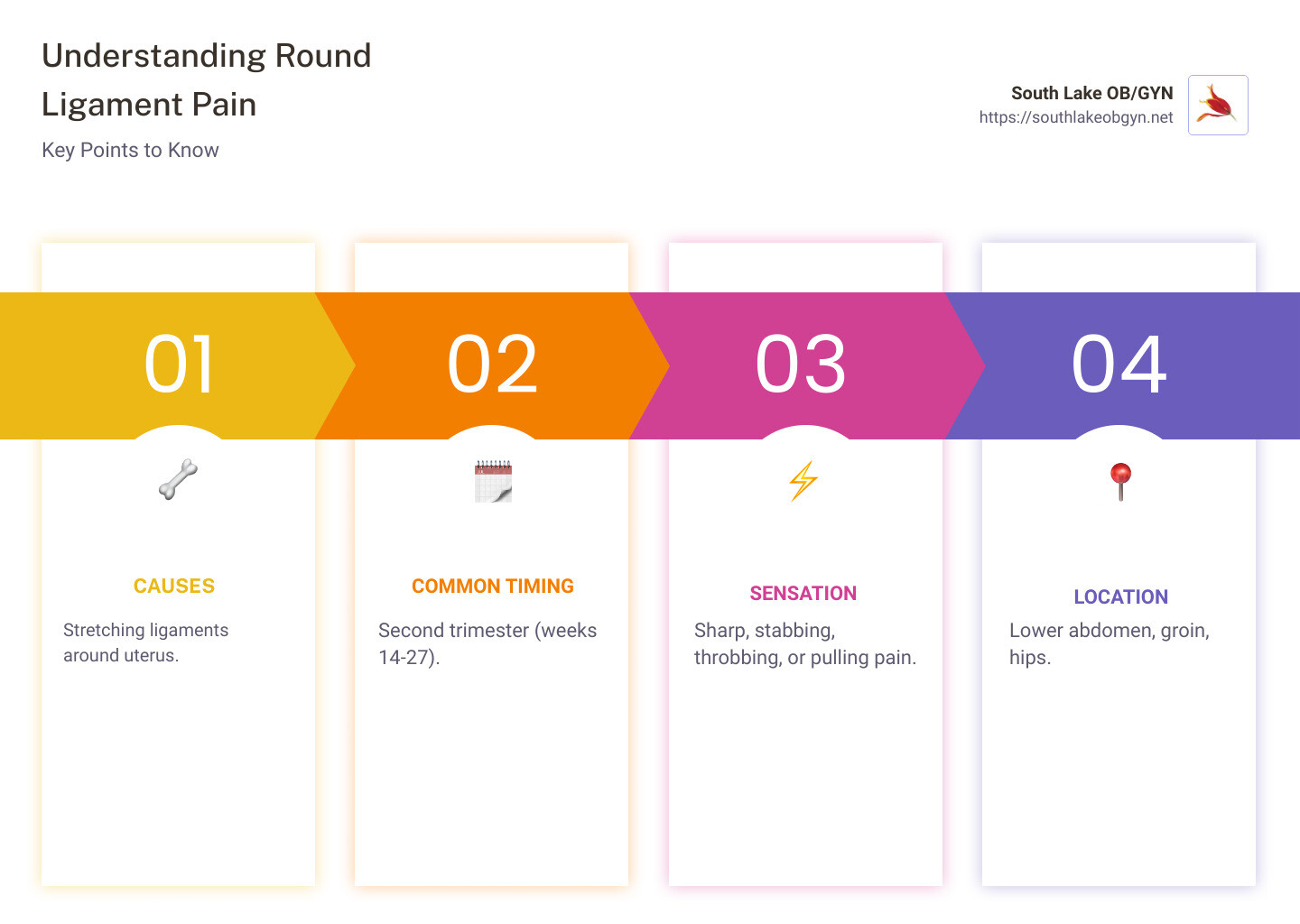
Quick Facts:
- Causes: Stretching ligaments around uterus
- Common Timing: Second trimester (weeks 14-27)
- Sensation: Sharp, stabbing, throbbing, or pulling pain
- Location: Lower abdomen, groin, hips
Let’s dive a bit deeper into why this happens. Round ligaments are like ropes that support your uterus. As your baby grows, these ligaments stretch, leading to momentary pain, especially during sudden movements.
I’m Dr. Matthew Casavant. With over 20 years of experience in obstetrics and gynecology, I’ve guided countless women through the changes their bodies undergo during pregnancy. Understanding what does round ligament pain feel like can ease your worries and help you enjoy this beautiful journey.
Feel free to keep reading to learn more, or check out this infographic for a quick overview:
What is Round Ligament Pain?
Round ligament pain happens because of the stretching of two round ligaments in your pelvis. These ligaments are like strong ropes that support your uterus.
When you’re pregnant, your uterus grows to make room for your baby. This growth stretches the round ligaments, which can cause pain. Think of it as a rubber band being pulled tight. Sometimes, this stretching happens quickly, like when you stand up too fast or roll over in bed.

Connective Tissue and Pregnancy Changes
Round ligaments are part of the connective tissue in your body. Connective tissues are like the body’s building blocks, providing structure and support. During pregnancy, these tissues have to change and adapt.
Fun Fact: Each round ligament is about 10 to 12 centimeters long. They connect your uterus to your lower abdominal wall through your groin.
As the ligaments stretch, they can cause a sharp or stabbing pain. This is most common in the second trimester, around weeks 14 to 27. But don’t worry, this pain is usually harmless. It’s just another sign that your body is doing an amazing job supporting your growing baby.
Feel free to keep reading to learn more, or check out this infographic for a quick overview:
What Does Round Ligament Pain Feel Like?
Common Descriptions
Just because you’re having abdomen pain though does it necessarily mean that its stemming from your round ligaments. To help answer the question, ‘What does round ligament pain feel like?’ it’s important to identify the specific area and type of pain in the abdomen that round ligament pain causes. Round ligament pain is often described as a sharp or stabbing sensation. Imagine a sudden, intense pain that catches you off guard. It might feel like a pulling or throbbing sensation that comes out of nowhere. Some people also describe it as a dull ache that lingers after a particularly active day.
Dr. Kameelah Phillips, an ob-gyn, notes that this pain can feel like a “shooting pain” that radiates from your lower abdomen into your groin. It’s a unique kind of discomfort that can be quite startling, especially if it’s your first time experiencing it.
Typical Locations
The pain typically starts in the lower abdomen and can radiate down into the groin or even the hips. Interestingly, round ligament pain is more commonly felt on the right side of the body. Dr. Frederick Friedman, Jr. explains that while both ligaments can cause pain, the right side is usually more affected, though doctors aren’t entirely sure why.
You might feel the pain on:
- Right side: Most common, often due to the position of the uterus.
- Left side: Less common but still possible.
- Both sides: Some people experience pain on both sides, depending on how their ligaments are stretching.
These sensations can be triggered by sudden movements like standing up quickly, rolling over in bed, or even sneezing. The pain is usually short-lived, lasting only a few seconds or minutes, but can be quite intense.
Feel free to keep reading to learn more, or check out this infographic for a quick overview:

When Does Round Ligament Pain Start?
Round ligament pain usually begins in the second trimester of pregnancy, around weeks 14 to 27. This is when your uterus starts to grow rapidly, stretching the ligaments that support it.
However, the timing can vary. Some women may feel it a bit earlier, while others might notice it later in their pregnancy.
Early or Later
- Earlier: It’s possible to feel round ligament pain as early as the end of the first trimester. This is less common but not unusual.
- Later: Some women may not experience this pain until well into the second trimester or even the beginning of the third trimester.
Pregnancy Progression
As your pregnancy progresses, your uterus expands to accommodate your growing baby. This expansion puts more strain on the round ligaments, which can cause discomfort.
The pain is often more noticeable when you make sudden movements, like standing up quickly or rolling over in bed. It can also be triggered by coughing, sneezing, or laughing.
Understanding the timing and triggers of round ligament pain can help you manage it better. If the pain is severe or persistent, be sure to consult your healthcare provider.
Common Triggers of Round Ligament Pain
People who ask, ‘What does round ligament pain feel like?’ also frequently ask what the common triggers and causes are surrounding the pain and issue. Round ligament pain often catches you off guard and is usually triggered by sudden movements that stretch the ligaments supporting your growing uterus. Here are some common actions that can set off this discomfort:
Sudden Movements
Quick movements can make your round ligaments contract rapidly, causing sharp pain. Standing up quickly or rolling over in bed are typical culprits. Imagine you’re lying down and suddenly need to get up; the quick motion can pull on these already-stretched ligaments.
Coughing and Sneezing
Even something as simple as a cough or sneeze can trigger round ligament pain. These actions cause sudden pressure changes in your abdomen, leading to a quick stretch of the ligaments. To minimize the pain, try to flex your hips slightly before coughing or sneezing.
Laughing
A hearty laugh can also lead to round ligament pain. The sudden contraction of your abdominal muscles can cause a quick pull on the ligaments, resulting in a sharp, stabbing sensation.
Physical Activity
Engaging in physical activity can exacerbate the pain. Jogging, dancing, or even bending over to pick something up can put extra strain on your round ligaments. If you experience discomfort during exercise, consider modifying your routine to include gentler activities like walking or prenatal yoga.
Understanding these triggers can help you manage and possibly avoid some of the discomfort associated with round ligament pain.
Next, let’s look at some effective ways to relieve round ligament pain.
How to Relieve Round Ligament Pain
Rest and Positioning
Resting is one of the simplest ways to ease round ligament pain. When you feel a sharp pain, sit down and relax. Changing positions slowly can also help. Avoid sudden movements like getting up quickly from a chair or rolling over in bed too fast.
Lying on your side with a pillow between your legs can provide extra support. Some find it helpful to place another pillow under their belly. This can relieve pressure on the round ligaments and make you more comfortable.
Warmth and Support
Applying warmth to the affected area can be very soothing. A warm compress or a heating pad on your lower abdomen can help relax the muscles and ease the pain. A warm bath is another great way to relieve discomfort and relax your body.
A maternity support belt can offer significant relief. These belts provide gentle compression and support to your growing belly, which helps distribute the weight more evenly. This can reduce the strain on your round ligaments.
Medication and Exercise
If the pain is interfering with your daily activities, you might consider taking acetaminophen. Always check with your healthcare provider to ensure it’s safe for you.
Prenatal yoga and gentle stretches can also be beneficial. Yoga poses like the cat-cow pose and downward-facing dog can help stretch and release tension in your lower belly, hips, and groin area.
Gentle exercises can strengthen your muscles and improve flexibility, reducing the strain on your round ligaments. However, always consult with a certified prenatal yoga instructor or a healthcare provider before starting any new exercise routine.
By incorporating these strategies, you can manage round ligament pain more effectively and enjoy a more comfortable pregnancy.
When to See a Doctor
While round ligament pain is a common and harmless pregnancy symptom, there are times when you should seek medical attention. Here’s a quick guide to understanding when to consult your doctor:
Persistent Pain
If your pain doesn’t go away with rest or simple remedies, it’s time to see your doctor. Persistent pain may indicate a more serious condition.
Premature Contractions
Feeling contractions or pressure in your lower back? This could be a sign of premature labor. Contact your healthcare provider immediately.
Pain During Urination
Pain or burning when you urinate can signal a urinary tract infection (UTI), which needs prompt treatment.
Bleeding or Vaginal Discharge
Any bleeding or an increase in vaginal discharge should be reported to your doctor. These symptoms could indicate complications like preterm labor or infections.
Fever and Chills
A fever or chills can be a sign of an infection. Seek medical care if you experience these symptoms along with abdominal pain.
Nausea and Vomiting
If you’re experiencing nausea or vomiting not related to morning sickness, it’s important to consult your healthcare provider.
Pelvic Pressure
Feeling a lot of pressure in your pelvic area? This could be a sign of preterm labor or other complications. Reach out to your doctor right away.
Difficulty Walking
If the pain makes it hard for you to walk, get medical advice. This could indicate a more serious issue with your ligaments or muscles.
Remember: Trust your instincts. If something doesn’t feel right, don’t hesitate to contact your healthcare provider. Your well-being and your baby’s health are the top priorities.
Frequently Asked Questions about Round Ligament Pain
How do I know it’s just round ligament pain?
One of the most important factors in understanding the question, ‘What does round ligament pain feel like?’ is identifying the specific sensations or pains to ensure it is indeed round ligament pain and not something else. Round ligament pain is typically described as a sharp, sudden spasm. It often occurs on the right side but can also be felt on both sides of your lower abdomen or groin. The pain usually lasts just a few seconds and is triggered by sudden movements like standing up quickly, rolling over in bed, or even coughing and sneezing.
Key Characteristics:
– Sharp and sudden pain
– Right side more common
– Lasts a few seconds
– Triggered by movement
If your pain fits this description, it’s likely round ligament pain. However, if the pain is persistent or severe, consult your healthcare provider.
What can be mistaken for round ligament pain?
Round ligament pain can sometimes be confused with other conditions. Here are a few:
- Hip Flexor Strain: This pain is usually more localized to the hip area and can be aggravated by specific movements like lifting your leg.
- Hernia: A hernia can cause a bulge and pain in the groin area, often worsening with activity.
- Differential Diagnosis: Other conditions like appendicitis, urinary tract infections, and even preterm labor can mimic round ligament pain.
If your pain is accompanied by other symptoms like fever, vomiting, or vaginal bleeding, seek medical attention immediately.
At what month does round ligament pain start?
When tasked with the question, ‘What does round ligament pain feel like?’ you might also be wondering at what month in pregnancy round ligament pain might occur. Round ligament pain usually starts in the second trimester, around weeks 14-27. However, it can begin earlier or later depending on your pregnancy. As your uterus expands, the round ligaments stretch, causing the pain.
Typical Timeline:
– Second trimester (Weeks 14-27)
– Can start earlier or later
Understanding this timeline can help you anticipate when you might start feeling these discomforts and prepare accordingly.
Conclusion
Round ligament pain is a common symptom during pregnancy, especially in the second trimester. While it can be uncomfortable and sometimes sharp, it’s usually harmless for both you and your baby. The pain occurs because your ligaments are stretching to support your growing uterus.
At South Lake OB/GYN, we understand how unsettling new aches and pains can be during pregnancy. Rest assured, round ligament pain typically resolves after childbirth as your body returns to its pre-pregnancy state.
However, it’s important to seek medical advice if your pain is severe, persistent, or accompanied by other symptoms like fever, chills, or vaginal bleeding. These could be signs of a more serious condition that needs immediate attention.
For more information on managing pregnancy symptoms and ensuring a healthy pregnancy, visit our Obstetrics page. We’re here to support you every step of the way.
If you have more questions or need personalized advice, don’t hesitate to contact us. We’re always here to help you navigate your pregnancy journey safely and comfortably.